
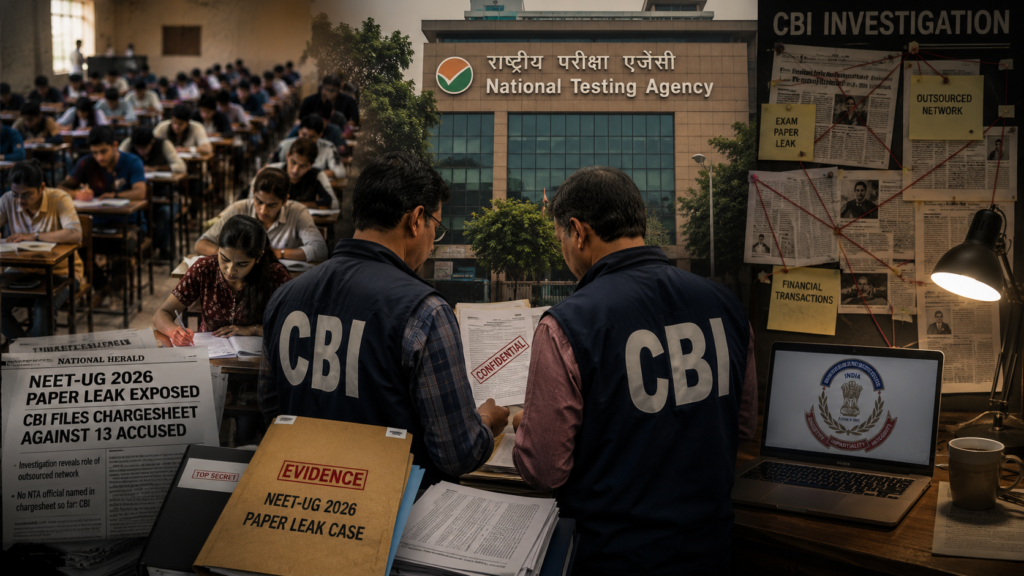
The NEET-UG 2026 paper leak refers to the alleged illegal disclosure of confidential examination questions before the National Eligibility cum Entrance Test (Undergraduate). The CBI is investigating how the examination material was accessed, who benefited from the leak, and whether any government officials were involved.
Introduction
The NEET-UG 2026 paper leak investigation has reached a significant stage after the Central Bureau of Investigation (CBI) filed a chargesheet against 13 accused. The development has attracted nationwide attention because millions of medical aspirants depend on the examination for admission to undergraduate medical courses.
One of the biggest highlights of the chargesheet is the CBI’s finding regarding the National Testing Agency (NTA). According to the investigation, the agency has not named any NTA official as an accused in the chargesheet filed so far. Instead, investigators concluded that the leak was carried out by individuals involved in handling confidential examination material through outsourced processes. The findings may influence public debate over examination security while the investigation continues.
What Happened?
The CBI has formally filed a chargesheet against 13 individuals in connection with the NEET-UG 2026 paper leak investigation.
According to the investigation, the accused allegedly conspired to illegally obtain confidential examination material before the exam and distribute it to selected candidates for financial gain.
The chargesheet outlines how the network operated and identifies the role played by different accused persons. However, one of the most notable findings is that no NTA official has been named as an accused in the chargesheet submitted so far.
Investigators stated that the evidence collected during the probe points towards a conspiracy involving individuals associated with outsourced examination processes rather than officials working within the National Testing Agency itself.
The investigation remains open, and further forensic examination of electronic devices and digital evidence is continuing.
Complete Details
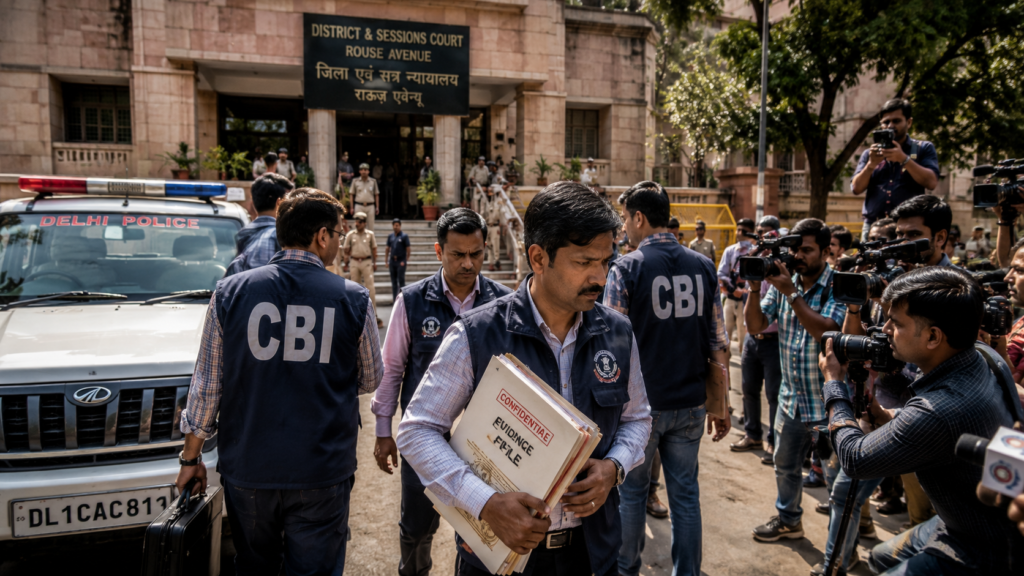
The NEET examination is one of India’s most competitive entrance tests, with millions of candidates appearing every year for admission to MBBS, BDS and other undergraduate medical courses.
Because of its national importance, any allegation of question paper leakage immediately raises concerns about fairness and transparency.
During its investigation, the CBI reportedly examined:
- Digital evidence
- Mobile phones
- Electronic devices
- Financial transactions
- Communication records
- Statements of witnesses
- Examination handling procedures
Investigators reconstructed the chain through which confidential examination material allegedly reached members of the criminal network.
The agency’s findings indicate that the leak did not originate from officials employed directly by the National Testing Agency.
Instead, according to the chargesheet, the conspiracy allegedly involved individuals connected with outsourced operational activities responsible for handling examination logistics.
This distinction is important because public criticism following the controversy had raised questions about the accountability of the NTA itself.
The CBI has clarified through its chargesheet that, based on the evidence currently available, no NTA officer has been made an accused.
Officials have also indicated that forensic examination of electronic evidence continues, meaning additional findings could emerge if fresh evidence is discovered.
How Did the Alleged Network Operate?
Although the investigation is still progressing, the chargesheet suggests that the accused allegedly worked together in an organised manner.
The suspected network reportedly included individuals responsible for:
- Accessing confidential material
- Sharing examination content illegally
- Contacting beneficiaries
- Receiving financial payments
- Coordinating communication among members
The CBI has collected documentary as well as digital evidence to support these allegations before filing the chargesheet.
The matter will now proceed through the judicial process where evidence will be examined by the court.
Major Finding on NTA’s Role
Perhaps the biggest development in the chargesheet is the agency’s conclusion regarding the National Testing Agency.
According to the investigation:
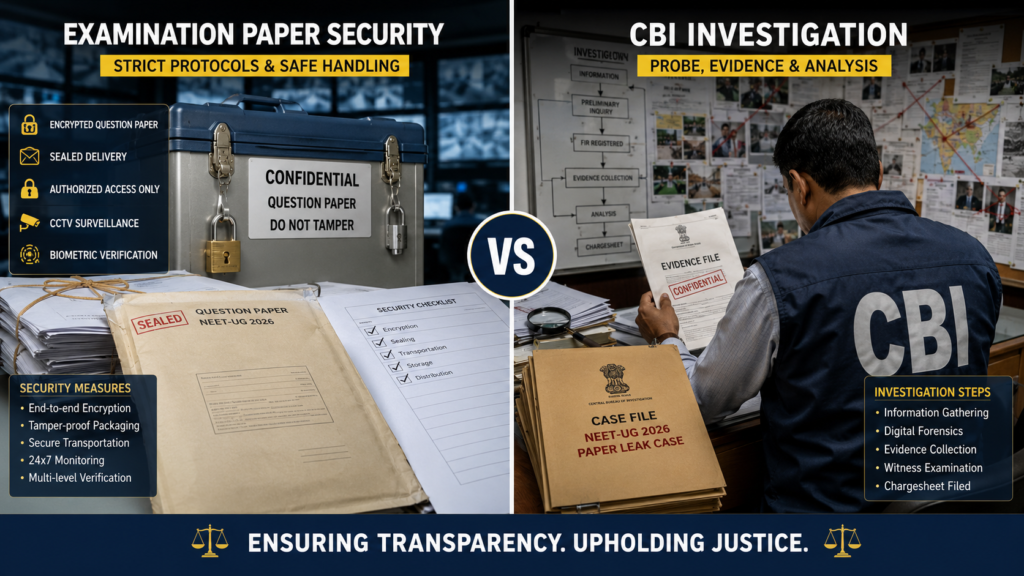
- No NTA official has been named as an accused.
- The evidence gathered so far does not indicate direct involvement of NTA officers.
- The alleged leak is linked to individuals associated with outsourced examination handling processes.
- The investigation is still continuing, and forensic analysis has not yet concluded.
This finding is significant because the NTA had faced intense criticism following reports of irregularities.
However, the CBI’s present chargesheet separates allegations against the accused individuals from the functioning of NTA officials based on the evidence available at this stage.
Why This Matters
The case extends far beyond the legal proceedings against the accused. It directly affects public confidence in India’s competitive examination system.
Every year, millions of students dedicate months or even years to preparing for NEET. Allegations of paper leaks can undermine trust in the fairness of the examination process and create anxiety among candidates and parents.
The CBI’s findings regarding the NTA are therefore significant because they distinguish between alleged criminal actions by specific individuals and the responsibility of the examination authority based on the evidence currently available.
At the same time, experts argue that the incident highlights the need for stronger safeguards in outsourced examination processes. Enhanced digital security, tighter access controls, stricter background verification of personnel, and continuous monitoring of confidential material may help reduce the risk of similar incidents in the future.
Public & Expert Reaction
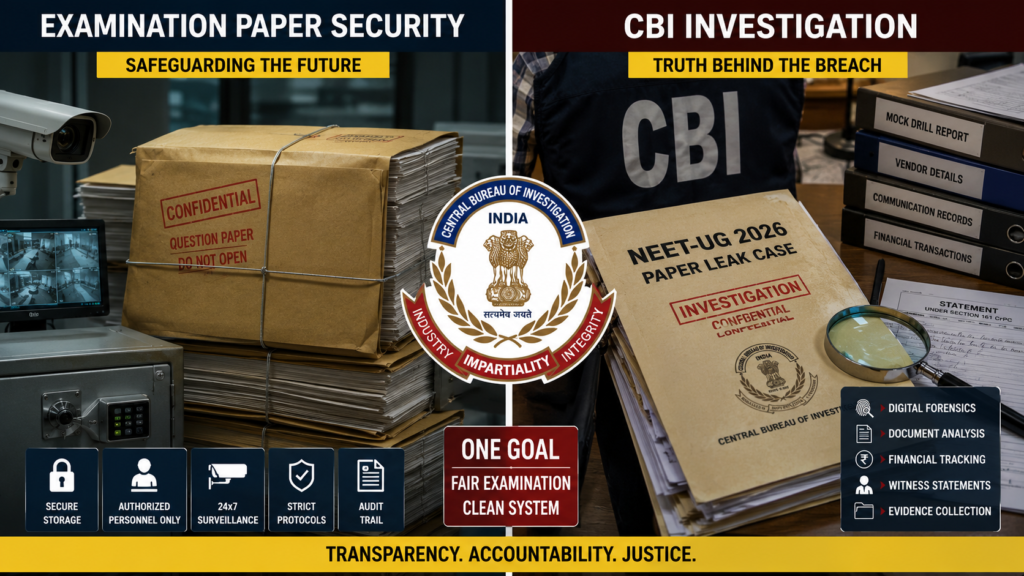
The latest chargesheet has generated mixed reactions from students, education experts and legal observers.
Many medical aspirants welcomed the progress in the investigation, saying it brings greater clarity to one of the country’s biggest examination controversies. However, student groups continue to demand stronger safeguards to prevent similar incidents in future examinations.
Education experts believe that while the CBI’s findings are important, they should not end the conversation about examination security.
According to assessment specialists, large-scale competitive examinations require multiple layers of protection, including:
- End-to-end digital encryption
- Better monitoring of outsourced vendors
- Real-time audit systems
- Stronger cybersecurity protocols
- Regular security audits before every examination
Legal experts also point out that filing a chargesheet is not the end of the judicial process. The accused are presumed innocent until proven guilty in court, and the prosecution must establish its case based on the evidence presented.
Important Facts
Quick Highlights
- CBI has filed a chargesheet against 13 accused.
- No NTA official has been named in the chargesheet filed so far.
- Investigation suggests the alleged leak involved individuals connected to outsourced examination handling.
- Digital forensic examination is still underway.
- The judicial process will determine criminal liability.
- The investigation remains open if fresh evidence emerges.
NEET Paper Leak: Allegations vs CBI Findings
| Issue | Initial Public Concern | CBI Finding So Far |
|---|---|---|
| Paper leak | Yes | Chargesheet filed |
| Number of accused | Multiple suspects | 13 accused |
| NTA officials involved | Public speculation | No NTA official named |
| Investigation status | Ongoing | Chargesheet filed, probe continues |
| Digital forensic analysis | Pending | Still continuing |
What Happens Next?
Following the filing of the chargesheet, the case will move through the judicial process.
The court will:
- Examine the chargesheet.
- Consider the evidence submitted by the CBI.
- Hear arguments from both the prosecution and defence.
- Decide the next stages of the criminal proceedings.
Meanwhile, the CBI has indicated that forensic analysis of electronic devices and other evidence is still in progress. If new evidence emerges, the agency may take further legal action in accordance with the law.
Authoritative Sources
Readers should rely on verified information from official and credible institutions, including:
- Central Bureau of Investigation (CBI)
- National Testing Agency (NTA)
- Ministry of Education, Government of India
- Supreme Court of India orders (where applicable)
- Official court records and filings
Frequently Asked Questions (FAQs)
1. How many people have been chargesheeted in the NEET-UG 2026 paper leak case?
The CBI has filed a chargesheet against 13 accused in connection with the alleged paper leak.
2. Has the CBI named any NTA official?
No. According to the chargesheet filed so far, no National Testing Agency official has been named as an accused.
3. Is the investigation over?
No. The CBI has stated that forensic examination of electronic evidence is continuing, and the investigation remains open if additional evidence is discovered.
4. Does the chargesheet mean the accused are guilty?
No. A chargesheet contains the prosecution’s allegations and evidence. Guilt or innocence can only be determined by the court after a trial.
5. Will the NEET examination process change?
The government and examination authorities may consider additional security measures in future examinations, although no specific reforms have been officially announced in connection with this chargesheet.
Final Verdict
The CBI’s chargesheet against 13 accused marks another significant milestone in the NEET-UG 2026 paper leak investigation. While the agency has identified an alleged criminal network involved in accessing confidential examination material, it has not named any NTA official as an accused based on the evidence currently available.
The case now enters the judicial phase, where the evidence will be tested in court. At the same time, the continuing forensic investigation means additional developments cannot be ruled out. For millions of students and parents across India, the case also serves as a reminder of the importance of transparent, secure and credible examination systems.
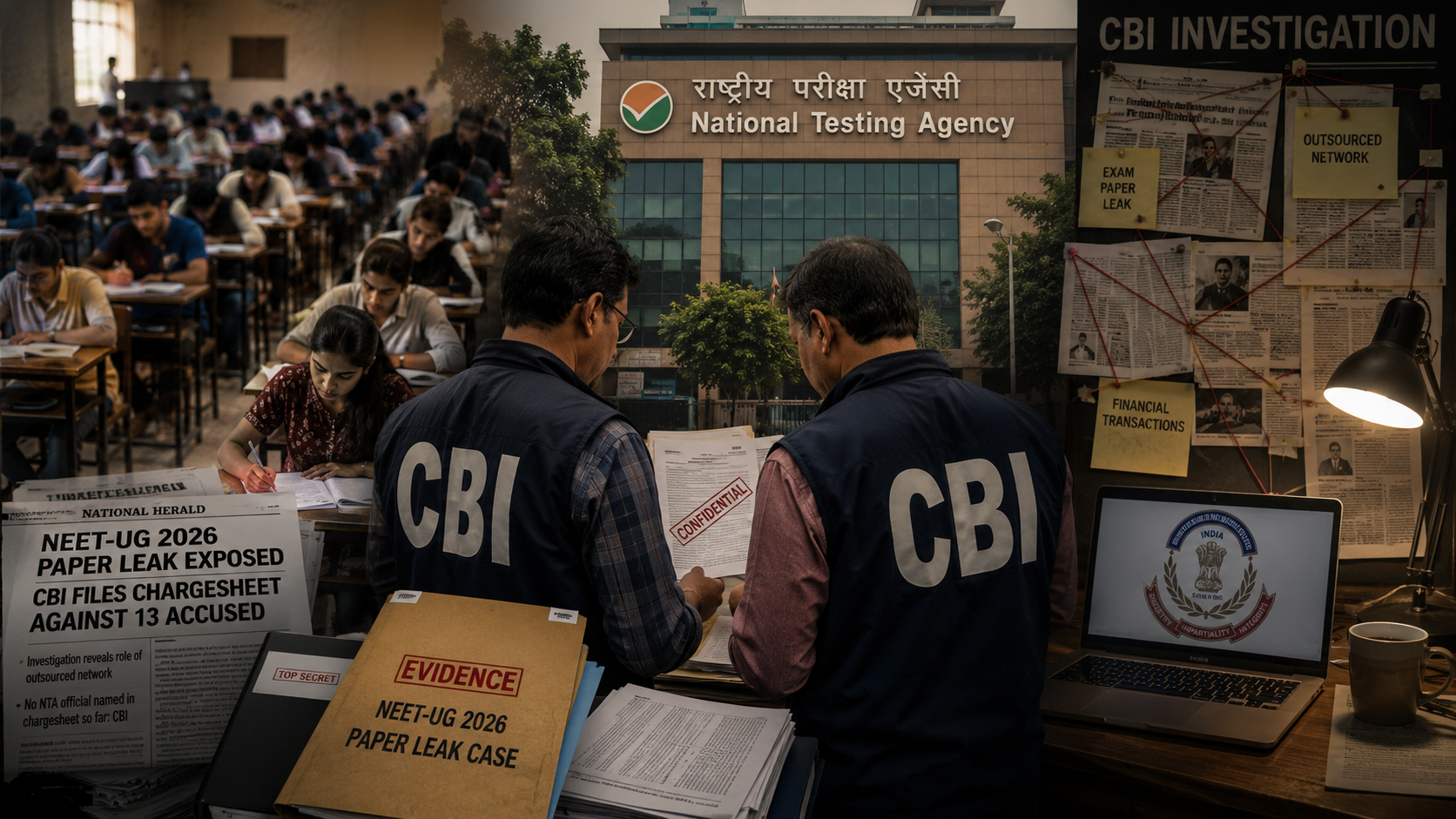
A realistic Indian examination hall with NEET aspirants taking an exam, CBI officers reviewing confidential documents in the foreground, National Testing Agency office building in the background, police investigation theme, newspapers, dramatic newsroom lighting, ultra realistic documentary photography, cinematic, 16:9.
For More Such Amazing Content Please Visit : https://dailykhabrein.com/


 By
By