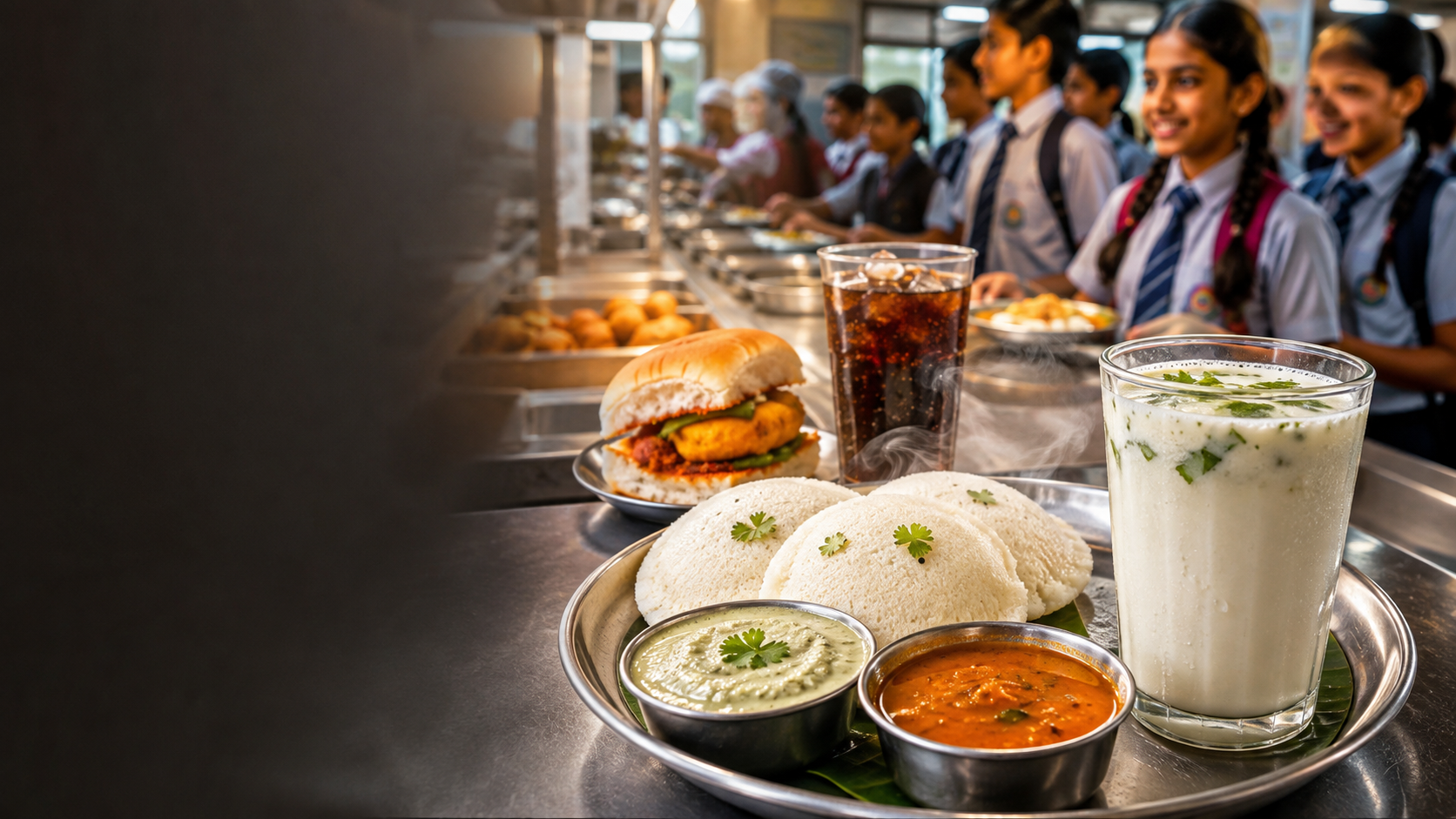

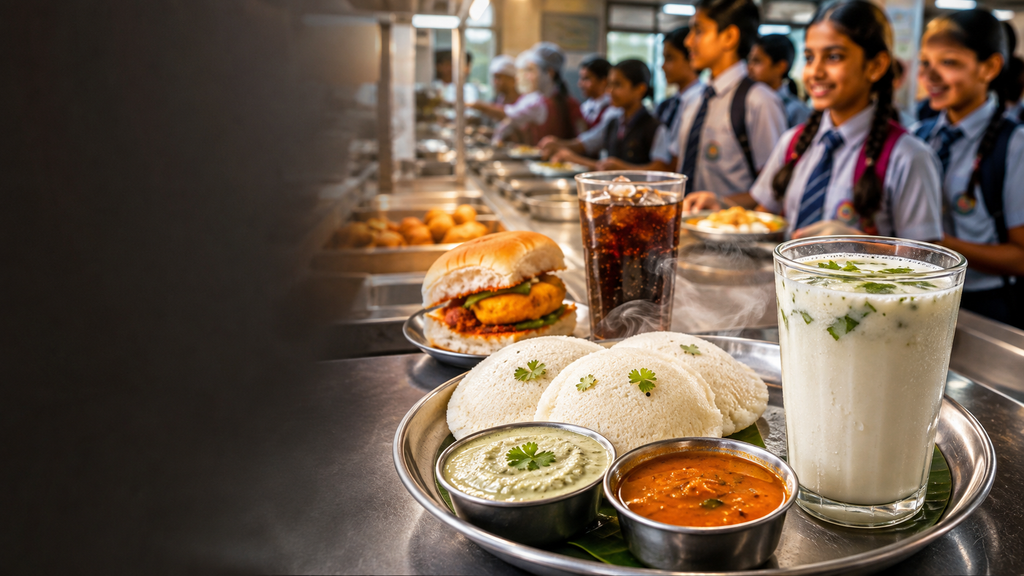
Mumbai’s school canteens are beginning to look very different. Items that have long been popular with students, including vada pav, samosa and fizzy drinks, are being pushed off menus as schools respond to stricter enforcement of food-safety and nutrition rules.
The change has become particularly visible in Mumbai, where some schools have started serving idli, dosa, poha, sheera and upma instead of fried snacks. Aerated beverages are also being removed, with options such as buttermilk and lassi being introduced.
The development follows action by Maharashtra Food and Drug Administration (FDA) Commissioner Tukaram Mundhe, who has directed schools to enforce existing food-safety regulations more strictly.
Definition: The Tukaram Mundhe school canteen initiative refers to Maharashtra’s stricter enforcement of food-safety and balanced-diet rules in schools. It aims to reduce the availability of foods high in fat, sugar, salt and other unhealthy ingredients while encouraging safer and more nutritious choices.
What Happened?
Maharashtra FDA Commissioner Tukaram Mundhe has stepped up enforcement of the Food Safety and Standards (Safe Food and Balanced Diets for Children in School) Regulations, 2020.
The regulations are not new. The FDA’s recent move is focused on ensuring that schools actually follow them. The rules cover government, aided and private schools and restrict the sale, display and advertising of foods considered high in fat, sugar, salt and other unhealthy components.
The restrictions also extend to the area within 50 metres of school campuses, according to reports on the Maharashtra directive.
Mundhe has made it clear that the objective is not simply to remove popular snacks. Schools are expected to create an environment where healthier food becomes an easier choice for children.
What is changing in school canteens?
- Vada pav and samosa are being removed from some school menus.
- Idli, dosa, poha, sheera and upma are being offered as alternatives.
- Aerated drinks are being removed.
- Buttermilk and lassi are being introduced in some schools.
- Schools are encouraging healthier food in students’ tiffin boxes.
- Canteens and food suppliers must comply with applicable FSSAI requirements.
- Food hygiene, storage, drinking water and waste-management standards are also being emphasised.
Complete Details
The Maharashtra FDA’s action is based on national food-safety regulations designed specifically for children in school environments.
The regulations call for balanced food choices and restrict foods high in saturated fat, trans fat, added sugar or sodium. The rules also cover food advertisements and availability around schools.
Mundhe’s intervention has given the rules fresh momentum in Maharashtra.
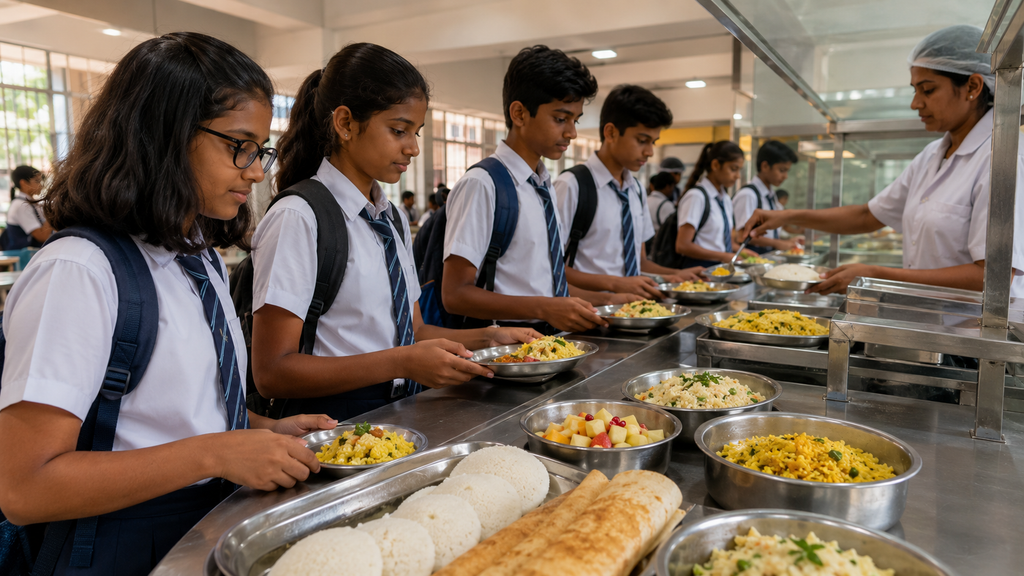
Reports from Mumbai show that the impact is already visible. Schools run by the Archdiocesan Board of Education (ABE) have removed vada pav and samosas and introduced foods such as idli, dosa, poha, sheera and upma. Aerated drinks have also been taken off menus, with buttermilk and lassi among the healthier alternatives being considered or served.
At some schools, the changes go beyond simply replacing one menu item with another.
For example, schools have been reviewing the use of cooking oil and reducing or eliminating deep-fried foods. Parents are also being encouraged to pay attention to what children bring in their lunch boxes.
The broader enforcement drive
The FDA’s campaign is not limited to school kitchens.
Schools, canteens, tuck shops, hostel kitchens and food suppliers are expected to follow food-safety requirements. Authorities have also indicated that schools will face inspections to check compliance. Reports state that inspections are planned at least twice a year, with food samples also part of the monitoring process.
The initiative is expected to cover a very large student population. India Today reported that Maharashtra has around 108,000 schools and more than 20 million students, highlighting the potential scale of the policy’s impact.
Why This Matters
Food choices made during childhood can influence eating habits later in life.
A school canteen does more than provide a quick snack between classes. It creates a food environment where students repeatedly see, buy and consume certain products.
That is why replacing fried snacks and sugary drinks with traditional foods can be significant.
The policy also shifts some responsibility from children to institutions. Instead of simply telling students to eat healthy, schools are being encouraged to make healthier options available in the first place.
Vada pav versus healthier alternatives
| Food choice | School-canteen approach |
|---|---|
| Vada pav | Being removed from restricted school menus |
| Samosa | Being replaced in some schools |
| Aerated drinks | Being removed |
| Idli | Encouraged as a traditional alternative |
| Poha | Included among healthier choices |
| Upma | Included among healthier choices |
| Buttermilk | Used as an alternative to fizzy drinks |
| Lassi | Offered as another beverage option |
The important point is that the policy does not mean every traditional Indian food is automatically healthy. Portion size, ingredients, cooking methods, sugar, salt and overall nutritional balance still matter.
The goal is a balanced food environment rather than simply replacing one popular item with another.
Public/Expert Reaction
The change has generated considerable public discussion because it involves foods deeply associated with Mumbai’s everyday food culture.
Supporters argue that schools are the right place to establish healthier eating habits. Food-health advocates have also welcomed the move, saying children should not be surrounded by unhealthy choices while being told to eat better.
Food-health campaigner Revant Himatsingka, popularly known as Food Pharmer, publicly welcomed Maharashtra’s action and argued that changing the food environment around children can influence long-term eating habits.
Mundhe himself has framed the issue as a broader public-health and behavioural challenge rather than simply a ban on individual foods. His message has been that healthier choices should become easier for children to make.
There is also an important practical question: Will students actually choose the healthier options?
That may depend on taste, affordability, availability and presentation. If healthier food is fresh, reasonably priced and attractive to students, the transition could be easier.
Important Facts
Here are the key points readers should know about the Maharashtra school food crackdown:
- The rules are based on existing national regulations. The Maharashtra FDA is tightening enforcement rather than creating an entirely new food-safety framework.
- Government, aided and private schools are covered. The directive is intended to apply broadly across school systems.
- HFSS foods are the central concern. Foods high in fat, sugar and salt are being targeted.
- The restriction extends beyond the canteen. The reported directive covers sale, display and advertising of restricted foods within 50 metres of school campuses.
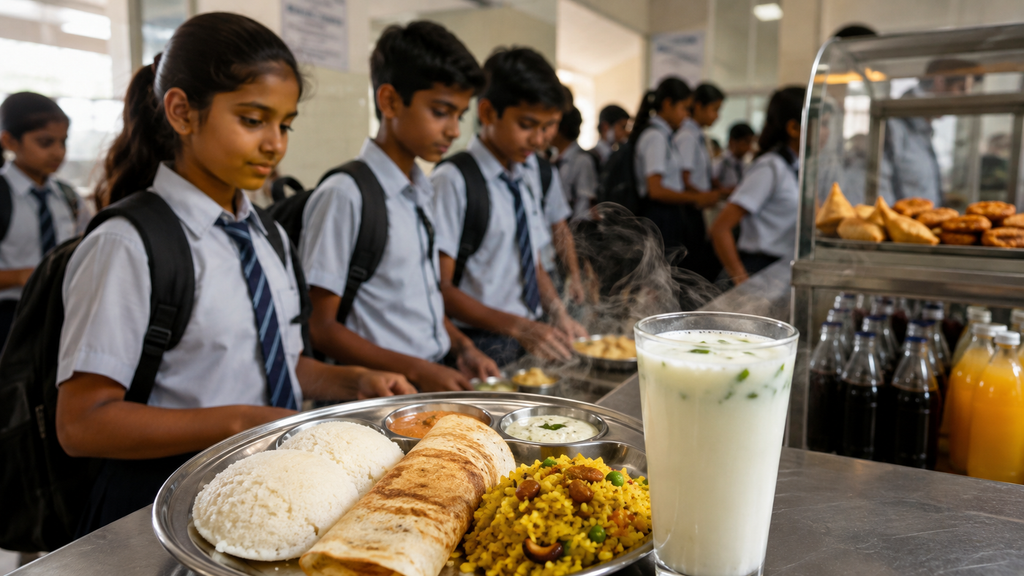
- Traditional foods are being promoted. Idli, dosa, poha, sheera and upma are among the alternatives reported in Mumbai schools.
- Aerated drinks are being removed. Some schools are replacing them with buttermilk and lassi.
- Food hygiene remains important. Safe storage, clean water, food handling and waste management are also part of the broader compliance effort.
- Schools can face regulatory action for violations. Reports have cited notices, licence-related action, seizure and prosecution under applicable food-safety provisions.
FAQs
1. Why is vada pav being removed from some school canteens?
Vada pav is among the fried foods being targeted under stricter enforcement of school food-safety and nutrition regulations. The focus is on limiting foods high in fat, salt and other unhealthy components in school environments.
2. What is replacing vada pav in Mumbai schools?
Some schools have introduced idli, dosa, poha, sheera and upma as alternatives. The exact menu can differ between schools.
3. Is cola banned in Maharashtra schools?
Aerated and sugary drinks are among the products being restricted under the school food rules. Some Mumbai schools have replaced them with beverages such as buttermilk and lassi.
4. Does the rule apply only to government schools?
No. The Maharashtra directive has been reported as applying to government, aided and private schools, covering different school boards.
5. Is this a completely new rule?
No. The underlying Food Safety and Standards (Safe Food and Balanced Diets for Children in School) Regulations, 2020 already exist. The current development is about stronger enforcement and implementation in Maharashtra.
Final Verdict
The Tukaram Mundhe school canteens drive represents a significant shift in how food is viewed inside educational institutions.
The headline-grabbing image of idli replacing vada pav and chaas replacing cola is more than a menu change. It reflects a broader attempt to create healthier food environments for children.
The success of the initiative, however, will depend on implementation. Healthy options must be affordable, hygienic, appealing and easily available if students are expected to choose them.
For parents, schools and policymakers, the bigger lesson is straightforward: healthy eating becomes easier when the environment supports healthy choices.
Maharashtra’s stricter enforcement could therefore become an important test of whether school food policies can move beyond written rules and produce lasting changes in children’s everyday eating habits.
Authoritative External Sources
For fact-checking and outbound references, prioritize:
- Food Safety and Standards Authority of India (FSSAI)
- Maharashtra Food and Drug Administration
- Food Safety and Standards Act, 2006 — India Code
The underlying school-food regulations are the Food Safety and Standards (Safe Food and Balanced Diets for Children in School) Regulations, 2020, which Maharashtra is now enforcing more strictly.
For More Such Amazing Content Please Visit : https://dailykhabrein.com/

 By
By