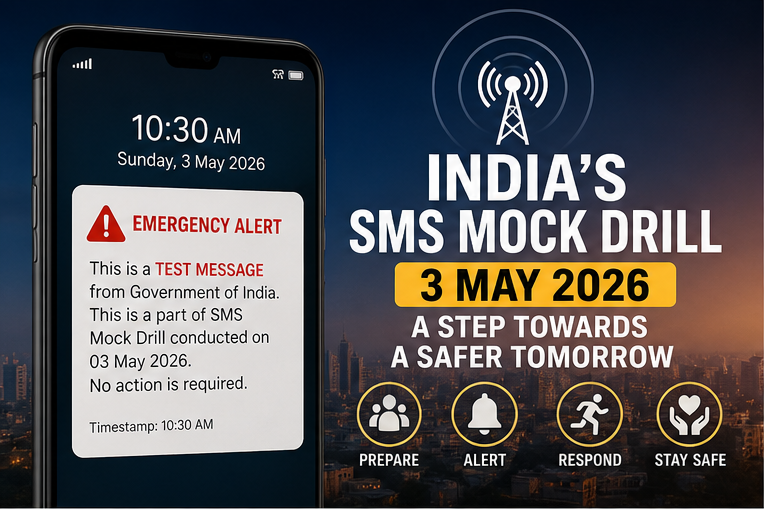
On May 3, 2026, India conducted a nationwide SMS mock drill, a large-scale exercise aimed at testing the country’s emergency communication system. This important and highly strategic move reflects India’s growing focus on disaster management, public safety, and real-time communication infrastructure.
For millions of mobile users across the country, the sudden alert message may have come as a surprise. But behind this drill lies a serious and forward-thinking approach—ensuring that when real emergencies strike, information reaches citizens instantly and effectively.
What Was the SMS Mock Drill?
The SMS mock drill was a simulated emergency alert test, where citizens received a message on their phones labeled as a “test alert.” These messages were not real warnings but part of a structured exercise designed to evaluate:
- Speed of message delivery
- Network reliability under load
- Public response and awareness
- Coordination between telecom operators and government systems
The goal was simple yet critical: to check whether India’s alert system can function flawlessly during real crises like earthquakes, floods, cyclones, or national emergencies.
Why This Drill Was So Important
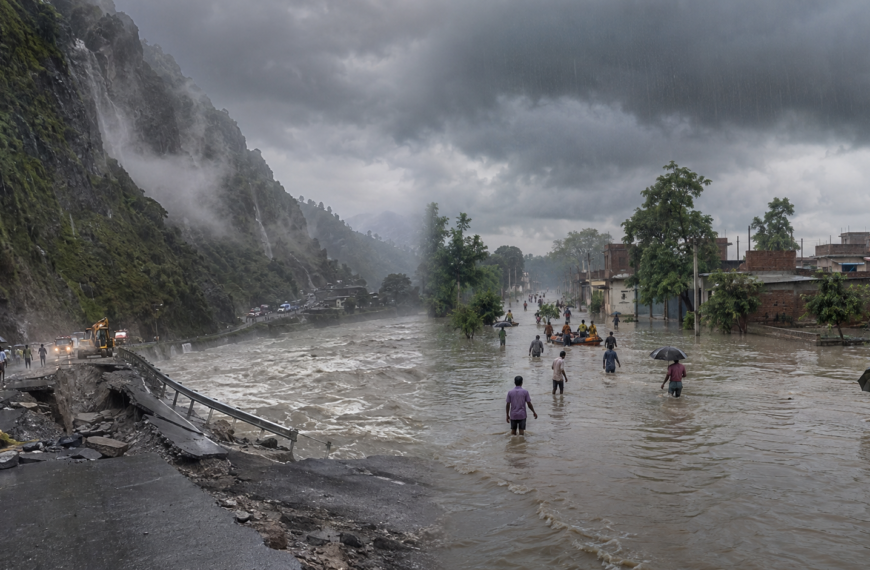
India is a country prone to multiple natural disasters—floods in the north, cyclones along the coasts, earthquakes in seismic zones, and heatwaves across plains. In such situations, timely communication can save thousands of lives.
This drill highlights three key priorities:
1. Faster Emergency Response
In disasters, even a delay of a few minutes can be dangerous. The drill tested how quickly alerts can reach millions simultaneously.
2. Strengthening Digital Infrastructure
With over a billion mobile users, India needs a system that works seamlessly across all networks and devices.
3. Public Awareness
Many people are unaware of how emergency alerts work. This drill helped familiarize citizens with such notifications, reducing panic during real events.
How the System Works
India’s emergency alert system is designed to send cell broadcast messages directly to mobile devices. Unlike regular SMS, these alerts:
- Do not require internet connectivity
- Reach all phones in a specific area simultaneously
- Override silent modes in some cases
- Are delivered even during network congestion
During the May 3 drill, these features were tested to ensure reliability in worst-case scenarios.
What Citizens Experienced
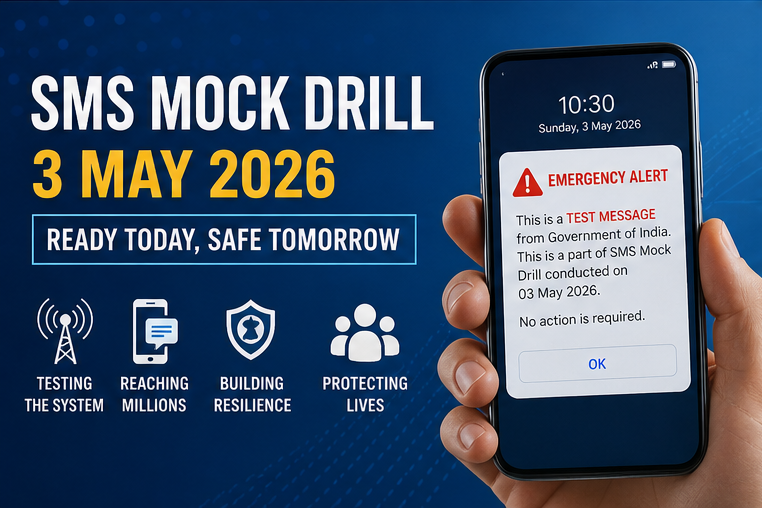
Across cities and rural areas, people reported receiving:
- A loud notification sound
- A flash message labeled as a “TEST ALERT”
- Instructions clarifying it was a drill
While some users were initially confused, most quickly understood its purpose once official clarifications were issued.
Interestingly, the drill also revealed gaps in public awareness, as many users took to social media to confirm whether the message was real or fake.
Key Observations from the Drill
The nationwide exercise provided valuable insights:
1. Strong Network Performance
Most telecom networks successfully delivered alerts within seconds, showing robust infrastructure readiness.
2. Minor Delays in Remote Areas
Some rural regions experienced slight delays, highlighting areas for improvement.
3. Awareness Gap
A significant portion of users did not immediately recognize the alert as a drill, indicating the need for better public education.
Government’s Vision Behind the Drill
The Indian government aims to build a world-class disaster management system. This SMS drill is part of a broader initiative that includes:
- Early warning systems
- Real-time weather tracking
- Integrated disaster response networks
- Public safety campaigns
The vision is clear: “Alert first, act fast, save lives.”
Global Context: How India Compares
Countries like the United States, Japan, and South Korea already use advanced emergency alert systems. India’s SMS mock drill shows that it is:
- Catching up with global standards
- Investing in scalable communication systems
- Prioritizing citizen safety in a digital age
This is a positive step toward global disaster preparedness benchmarks.
Challenges Highlighted by the Drill
While the drill was largely successful, it also exposed certain challenges:
1. Lack of Public Awareness
Many people mistook the alert for spam or a scam.
2. Device Compatibility Issues
Some older phones did not display the alert properly.
3. Language Barriers
Alerts were not uniformly understood across all regions, emphasizing the need for multilingual support.
What Needs Improvement
To make the system more effective, authorities may need to focus on:
- Awareness campaigns explaining emergency alerts
- Regional language customization
- Regular mock drills for familiarity
- Better integration with apps and media channels
How Citizens Should Respond in Real Emergencies
The drill also serves as a reminder of how to act during actual alerts:
- Stay calm and read the message carefully
- Follow official instructions immediately
- Avoid spreading rumors or panic
- Help others understand the alert if needed
Preparedness is not just the government’s responsibility—it’s a shared duty.
Role of Telecom Companies
Telecom operators played a crucial role in this drill. Their responsibilities included:
- Ensuring network stability
- Delivering alerts without delay
- Coordinating with government agencies
The success of this exercise reflects strong collaboration between public and private sectors.
Impact on Future Disaster Management
This mock drill is likely to have long-term benefits:
- Faster response times in real disasters
- Improved coordination between agencies
- Higher public trust in alert systems
- Reduced casualties during emergencies
In short, this was not just a test—it was an investment in future safety and resilience.
Public Reaction and Social Media Buzz
Social media platforms were flooded with reactions:
- Some users praised the initiative
- Others expressed confusion
- A few criticized the lack of prior information
Overall, the sentiment leaned positive, with many acknowledging the importance of such drills.
Why Regular Drills Are Necessary
One drill is not enough. Regular exercises are essential because:
- Technology evolves
- Networks change
- New users come online
- Awareness fades over time
Consistency ensures that both systems and citizens remain prepared.
Expert Take: A Positive Yet Incomplete Step
Experts believe that while the SMS mock drill was a strong and positive initiative, it is only the beginning.
To make the system truly effective, India must:
- Conduct region-specific drills
- Integrate alerts with GPS-based systems
- Improve last-mile connectivity
Conclusion: A Strong Signal for a Safer India
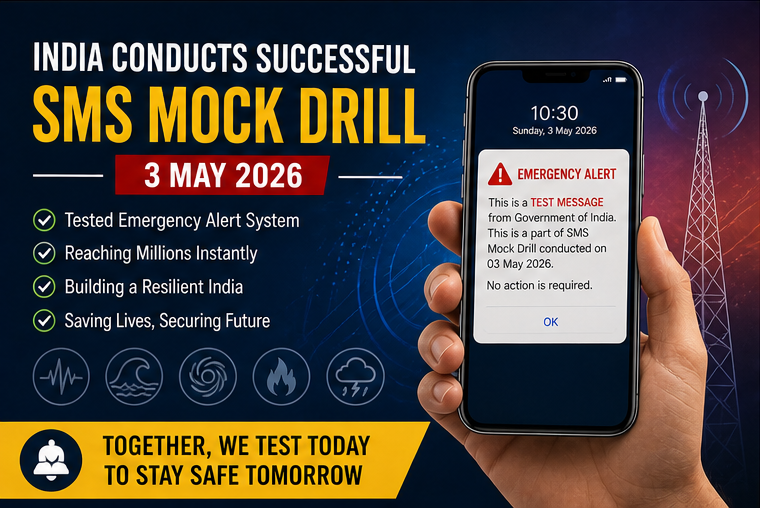
India’s SMS mock drill on May 3, 2026, sends a powerful and reassuring message—the country is taking emergency preparedness seriously.
While there are areas to improve, the overall execution demonstrates that India is moving in the right direction. In a world where disasters can strike without warning, such proactive measures are not just helpful—they are essential.
This drill was more than just a test message on your phone. It was a glimpse into a future where technology, awareness, and preparedness come together to protect lives.
FAQs
1. What was the SMS mock drill on May 3, 2026?
It was a nationwide test of India’s emergency alert system to check how quickly and effectively messages can be delivered during disasters.
2. Was the alert real or a warning?
No, it was only a test message and not an actual emergency.
3. Why did I receive the message?
You received it because your mobile network participated in the nationwide drill.
4. What should I do if I receive such alerts in the future?
Always read carefully and follow official instructions if it’s a real emergency.
5. Will there be more such drills?
Yes, regular drills are expected to improve preparedness and awareness.
For More Such Amazing Content Please Visit : https://dailykhabrein.com/

 By
By