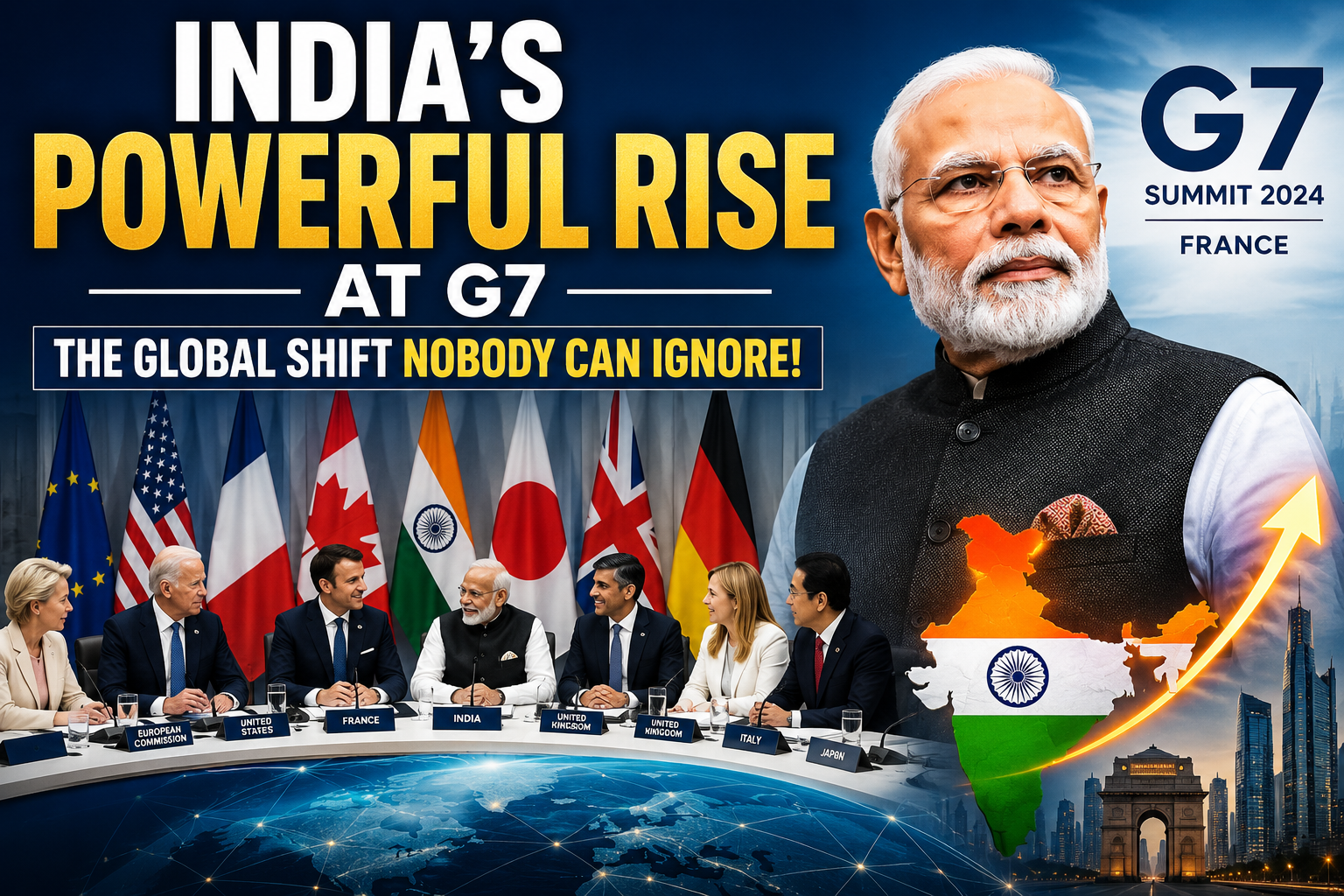

India’s Growing Influence at the G7 Summit
For years, the Group of Seven (G7) has been considered the world’s most powerful club of advanced economies. Yet one country that is not officially a member continues to attract significant attention at every summit—India.
From trade and technology to energy security and global governance, India has emerged as a key partner for G7 nations. Prime Minister Narendra Modi’s participation in successive G7 summits highlights a major shift in global geopolitics: the world’s largest democracy is becoming impossible to ignore.
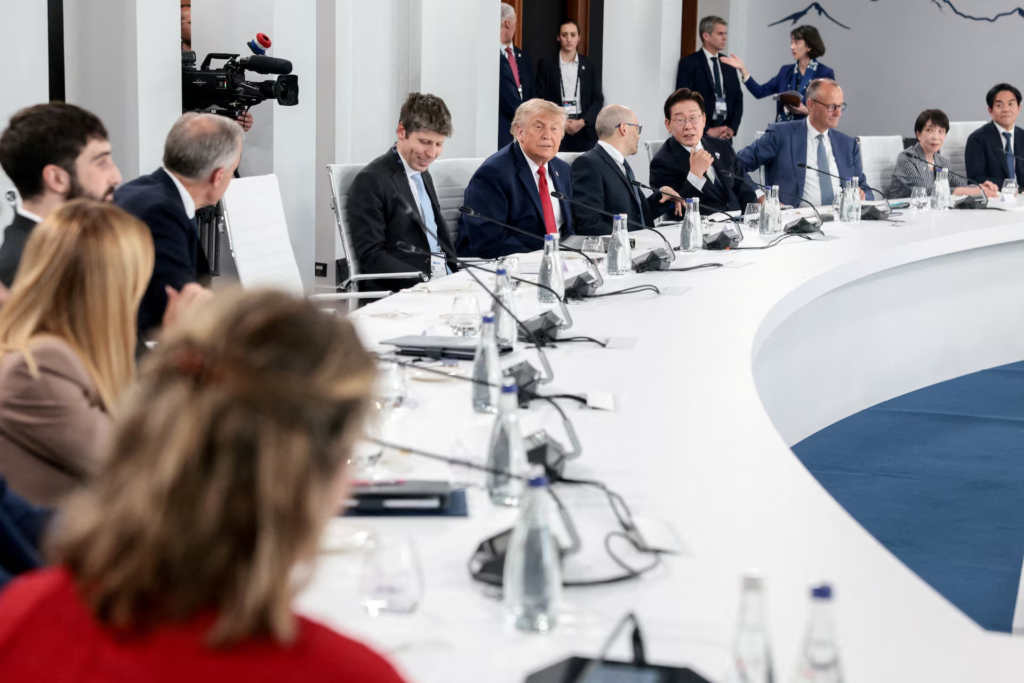
The latest G7 Summit in France once again showcased India’s increasing importance in shaping discussions on economic growth, artificial intelligence, supply chains, climate action, and international security.
What Is the G7?
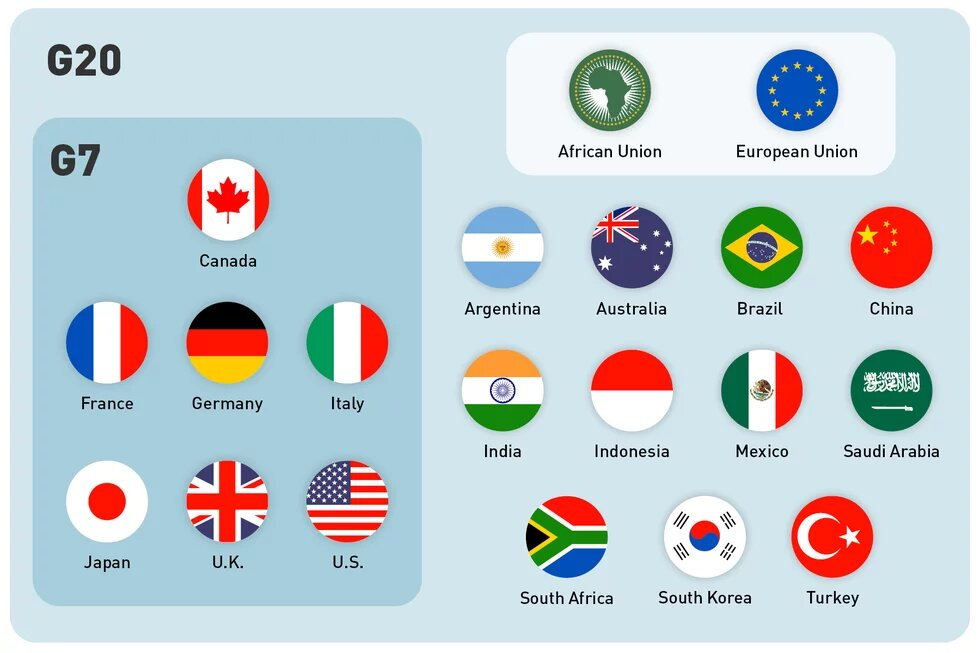
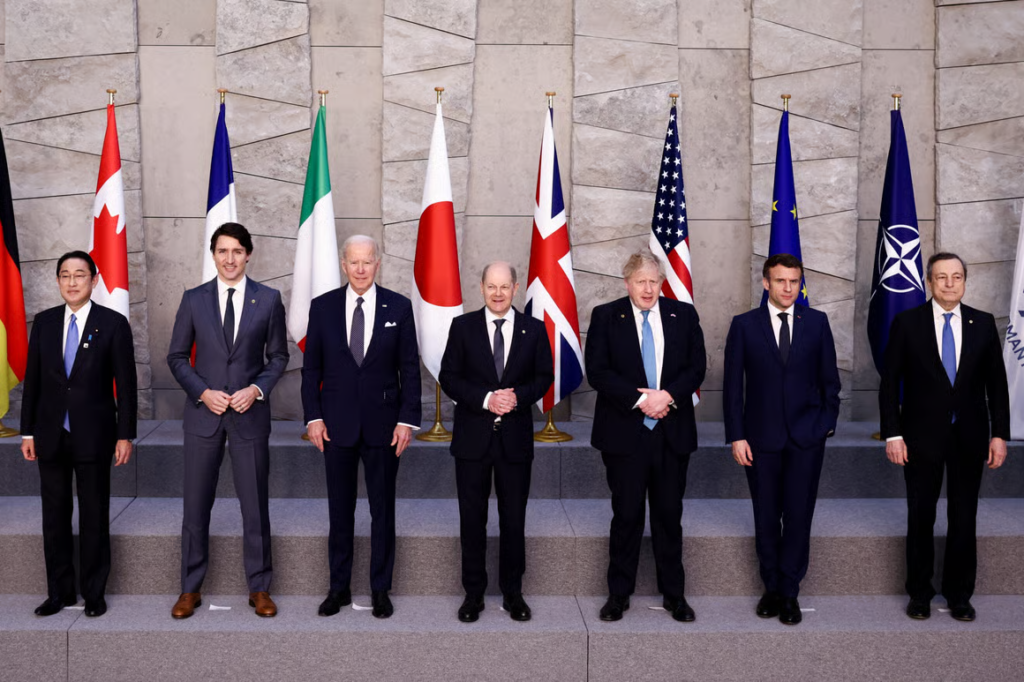
The G7 consists of seven advanced economies:
- United States
- Canada
- United Kingdom
- France
- Germany
- Italy
- Japan
Together, these nations discuss major global issues such as:
- Economic stability
- Trade policies
- Energy security
- Climate change
- International conflicts
- Emerging technologies
Although India is not an official member, it has frequently been invited as a guest nation because of its growing economic and strategic importance.
Why Is India Invited to the G7?
The answer is simple: India matters.
India is now among the world’s fastest-growing major economies and is expected to remain a key engine of global growth for years to come.
Several factors explain India’s importance:
1. World’s Largest Democracy
India represents over 1.4 billion people and plays a critical role in maintaining democratic values across the Indo-Pacific region.
2. Economic Powerhouse
India has emerged as one of the world’s largest economies and is increasingly viewed as a major manufacturing and investment destination.
3. Strategic Location
India sits at the center of vital trade routes connecting Asia, Europe, and the Middle East.
4. Voice of the Global South
India frequently advocates for developing countries on issues such as climate finance, food security, debt relief, and technology access.
PM Modi’s Message at the G7
At recent G7 meetings, Prime Minister Narendra Modi emphasized several priorities:
Global Economic Stability
India has called for reforms in global institutions to make them more representative of emerging economies.
Energy Security
New Delhi continues to push for diversified energy sources while ensuring affordable energy access for developing nations.
Technology and AI Governance
India advocates responsible development of Artificial Intelligence while ensuring technological benefits are shared globally.
Maritime Security
At the latest summit, PM Modi stressed the importance of protecting international shipping routes and ensuring the safety of seafarers amid growing geopolitical tensions.
Why the G7 Needs India
The relationship is no longer one-sided.
Today, many analysts believe the G7 needs India as much as India benefits from engagement with the group.
Counterbalancing China
Several G7 nations see India as a crucial partner in reducing dependence on Chinese manufacturing and critical mineral supply chains. Discussions on supply-chain resilience and economic security increasingly feature India as a central player.
Expanding Trade Partnerships
India’s massive consumer market presents enormous opportunities for businesses from G7 countries.
Technology Cooperation
Artificial Intelligence, semiconductors, cybersecurity, and digital infrastructure are becoming key areas of collaboration.
Climate Goals
India’s participation is essential for achieving meaningful global climate targets because of its scale and economic influence.
Key Outcomes of India’s Engagement at Recent G7 Summits
India’s participation has helped strengthen ties with several leading economies.
India-France Relations
French President Emmanuel Macron has consistently supported deeper engagement with India and invited New Delhi to participate actively in G7 discussions.
India-Canada Relations
Recent meetings between Prime Minister Modi and Canadian Prime Minister Mark Carney focused on trade, innovation, energy cooperation, education, and people-to-people ties, indicating improving bilateral relations.
India’s Global Outreach
India has used G7 platforms to strengthen engagement with Europe, North America, and emerging economies simultaneously.
Can India Become a G7 Member?

This question continues to generate debate.
Supporters argue that:
- India is one of the world’s largest economies.
- It has significant geopolitical influence.
- It represents a large share of the global population.
- It contributes increasingly to international stability.
However, expanding the G7 would require consensus among existing members, making formal membership a complex issue.
Even without membership, India already enjoys considerable influence through regular invitations and strategic partnerships.
Challenges in India-G7 Relations
Despite strong cooperation, some differences remain.
Trade Disputes
Negotiations on tariffs and market access occasionally create friction.
Climate Responsibilities
Developed nations and developing countries often disagree on climate financing and emissions targets.
Geopolitical Differences
India maintains an independent foreign policy and does not always align with Western positions on international conflicts.
Yet these differences have not prevented deeper engagement. In many ways, India’s independent approach makes it a valuable bridge between developed and developing nations.
The Future of India and the G7
The future points toward greater cooperation.
As global challenges become more complex—from AI regulation and cybersecurity to climate change and supply-chain resilience—India’s role is likely to expand further.
The latest G7 discussions demonstrated that India is no longer merely an invited guest. It has become a key stakeholder in shaping conversations that affect the global economy and international order.
Final Thoughts
India’s journey from a developing economy to a major global power has transformed its relationship with the G7.
While New Delhi remains outside the formal membership structure, its influence continues to grow with every summit. Whether the discussion involves trade, technology, climate action, or geopolitical stability, India’s voice is increasingly central to the future of global decision-making.
The message from recent G7 meetings is clear: the world’s richest nations may hold the summit, but India is rapidly becoming one of its most important participants.
For More Such Amazing Content Please Visit : https://dailykhabrein.com/

 By
By