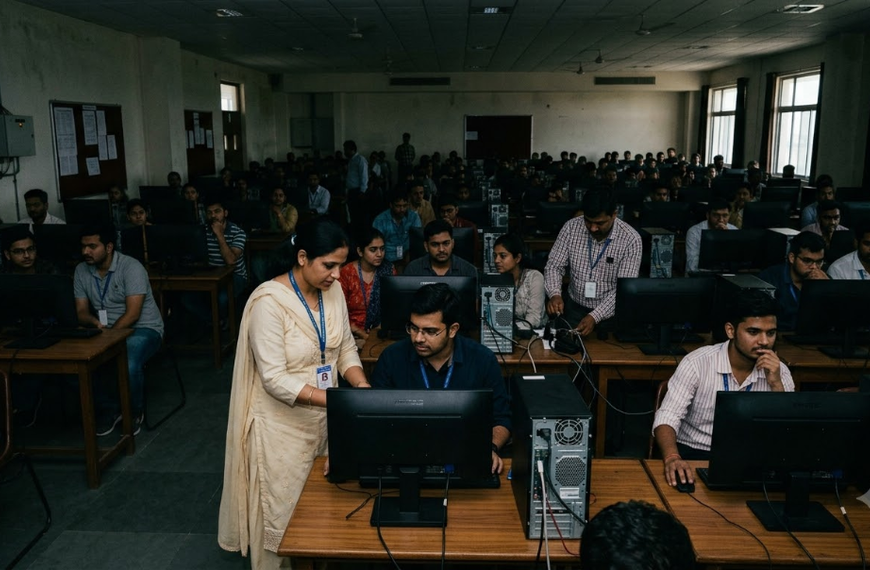


For years, cracking an IIT seat has been treated as the ultimate goal for engineering aspirants in India. But the engineering education landscape is becoming much broader. Today, students have more credible choices beyond the IIT system, including NITs, IIITs, IISc-linked programmes, leading state institutions and several highly regarded private universities.
The shift does not mean IITs have lost their importance. Instead, it reflects a more competitive and diverse engineering ecosystem where the right branch, curriculum, research opportunities, internships and career outcomes can matter as much as the college label.
What Happened?
The changing picture becomes clear from the current admission and ranking landscape.
For the 2026 academic year, JoSAA is managing admissions to 138 institutes, including 23 IITs, 31 NITs, 26 IIITs, IISc Bengaluru, IIEST Shibpur and 56 other government-funded technical institutes.
That means students who do not secure an IIT seat still have a large national-level pool of institutions available through the same counselling ecosystem.
The competition for IITs also remains intense. In JEE Advanced 2026, 179,694 candidates appeared in both papers and 56,880 qualified.
At the same time, the Ministry of Education’s NIRF 2025 Engineering rankings show that strong engineering institutions exist well beyond the IIT group. NIT Tiruchirappalli ranked ninth, while BITS Pilani ranked 11th, Anna University ranked 20th and Delhi Technological University ranked 30th.
Definition: Engineering colleges in India are institutions offering undergraduate and postgraduate technical programmes across disciplines such as computer science, electronics, mechanical, civil and electrical engineering. They include IITs, NITs, IIITs, universities, government colleges and private institutions.
Complete Details
IITs continue to offer exceptional advantages in research, academic reputation, alumni networks and access to major recruiters. For many students, an IIT remains an outstanding choice.
But the important question is no longer simply “IIT or nothing?”
Students are increasingly evaluating colleges according to their individual career goals.
For example, a student interested in software engineering may consider a strong computer science programme at an IIIT or another established institution. A student targeting core engineering may give greater importance to laboratories, faculty and industry exposure.
NITs are particularly important in this changing landscape. The NIT system includes institutions with long academic histories, strong technical programmes and national-level admissions through JEE Main.
The NIRF 2025 Engineering ranking illustrates this diversity. NIT Tiruchirappalli ranked ninth, BITS Pilani 11th, DTU 30th, IIIT Hyderabad 38th and NSUT 70th.
Several private institutions also appear in the NIRF rankings. Thapar Institute of Engineering and Technology ranked 29th, while Amrita Vishwa Vidyapeetham ranked 23rd.
Why the College Name Is Only One Factor

A student’s engineering outcome can depend on several factors:
- Quality of the chosen branch
- Faculty and teaching quality
- Internship opportunities
- Industry connections
- Research exposure
- Coding and technical culture
- Alumni network
- Placement opportunities
- Fees and return on investment
- Location and campus environment
This is why comparing colleges only by their brand name can lead to poor decisions.
Why This Matters
The biggest change is psychological.
For years, many students and parents viewed an IIT seat as the only definition of success in engineering. That approach can create enormous pressure and may encourage students to choose a college or branch purely for its brand.
The modern engineering market is more skills-driven.
Technology companies increasingly need graduates with practical abilities in areas such as artificial intelligence, cybersecurity, semiconductor technology, cloud computing, electronics, data science and robotics.
A student from a non-IIT institution who develops strong technical skills, completes meaningful internships and builds real projects can compete effectively for opportunities.
This does not make college reputation irrelevant. A strong institution can provide better exposure, networks and opportunities. But the institution is only one part of the equation.
IIT vs Other Strong Engineering Institutions
| Factor | IITs | NITs/IIITs | Leading Private/State Institutions |
|---|---|---|---|
| National reputation | Very high | High at leading institutes | Varies significantly |
| Admission route | JEE Advanced | Mainly JEE Main | Varies |
| Research exposure | Generally strong | Strong at leading institutes | Institution-dependent |
| Industry exposure | Strong | Strong at top institutes | Can be strong |
| Fees | Varies | Generally competitive | Can be higher |
| Choice of branches | Depends on rank | Depends on rank | Often broader |
| Best for | Research, technology, elite networks | Strong all-round engineering | Specialised programmes and flexibility |
The table should not be read as a blanket ranking. The quality can vary considerably from one institution and programme to another.
Public/Expert Reaction
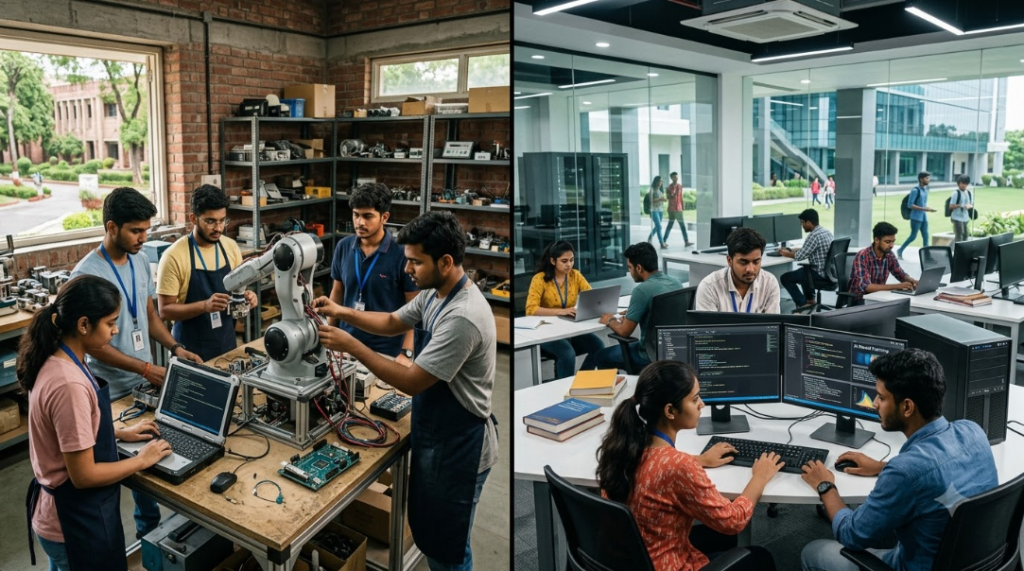
There is no single official statement declaring that IITs are no longer the best destination. In fact, the available data continues to show the strong position of IITs.
The more accurate conclusion is that IITs are no longer the only credible destination for ambitious engineering students.
The NIRF 2025 rankings provide a useful illustration. IIT Madras, IIT Delhi and IIT Bombay occupied the top three engineering positions, but the list also included NITs, BITS Pilani, Anna University, DTU, IIITs and several private universities among highly ranked institutions.
Students should therefore look beyond rankings alone.
A college’s branch-specific placement record, curriculum, faculty, infrastructure and internship ecosystem may be more relevant to an individual’s career than its overall rank.
Important Facts

- JoSAA 2026 covers 138 institutes, including IITs, NITs, IIITs and other government-funded technical institutions.
- JEE Advanced 2026 had 179,694 candidates appearing in both papers.
- A total of 56,880 candidates qualified JEE Advanced 2026.
- IIT Madras ranked first in NIRF 2025 Engineering rankings.
- NIT Tiruchirappalli ranked ninth in NIRF 2025 Engineering rankings.
- BITS Pilani ranked 11th, showing that highly regarded engineering options exist outside the IIT system.
- DTU ranked 30th and IIIT Hyderabad ranked 38th in NIRF 2025 Engineering.
- JoSAA’s official 2026 seat matrix provides institute- and programme-level seat information for admission planning.
FAQs
1. Are IITs still the best engineering colleges in India?
IITs remain among India’s strongest engineering institutions and dominate the top positions of the NIRF Engineering rankings. However, the best choice depends on the student’s branch, career objective, fees, research interests and placement opportunities.
2. Which colleges are good alternatives to IITs?
Leading NITs, IIITs, BITS Pilani, DTU, Anna University and several other established institutions can be strong alternatives, depending on the branch and career goal. NIRF 2025 lists many such institutions among India’s leading engineering institutes.
3. Is NIT better than a private engineering college?
There is no universal answer. A leading NIT may offer excellent value and reputation, but some private universities have strong infrastructure, specialised programmes and industry links. Students should compare the specific branch and college rather than using a simple public-versus-private rule.
4. Can a student get a good job without studying at an IIT?
Yes. Engineering careers depend on skills, projects, internships, technical knowledge and interview performance as well as educational background. An IIT can provide valuable opportunities, but it is not the only route to a successful technology career.
5. What should students check before choosing an engineering college?
Students should compare the branch-wise placement data, fees, curriculum, faculty, internships, laboratories, accreditation, campus culture, research opportunities and alumni network before making a final decision.
Final Verdict

The idea that “IIT is the only destination” is becoming outdated.
The IIT brand remains extraordinarily valuable, and students who secure a suitable IIT programme should certainly consider it seriously. But India’s engineering ecosystem has expanded far beyond the IIT gates.
Today’s aspirants have access to NITs, IIITs, established state institutions, specialised universities and leading private colleges. The smarter approach is to ask a different question:
Which institution and branch will give me the strongest platform for the career I want?
That shift—from chasing a label to evaluating the complete opportunity—could be one of the most important changes in India’s engineering education landscape.
Authoritative External Sources
For factual verification and reader trust, use official sources such as:
- Ministry of Education – NIRF Engineering Rankings 2025
- JoSAA – 2026 Admissions
- JEE Advanced – Official Website
- National Testing Agency
For More Such Amazing Content Please Visit : https://dailykhabrein.com/


 By
By