Introduction
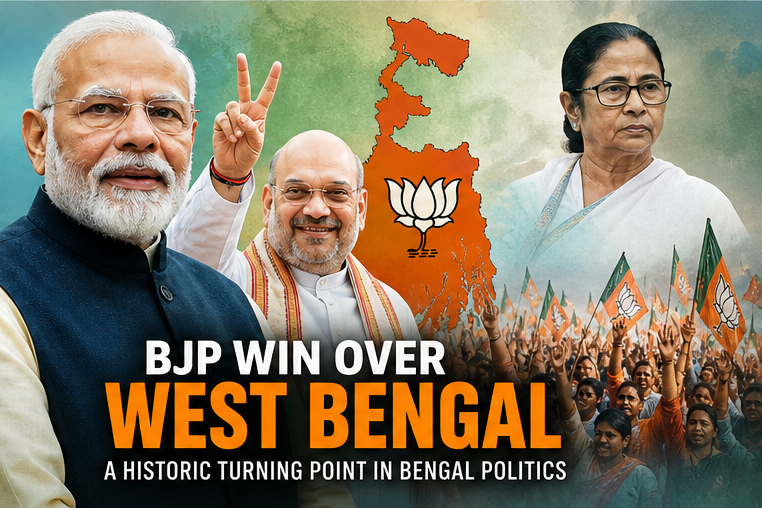
The political landscape of West Bengal has long been defined by strong regional forces, cultural identity, and deeply rooted ideological loyalties. For decades, the state has been dominated by powerful regional parties, particularly the All India Trinamool Congress (TMC), led by Mamata Banerjee. However, the emergence and eventual victory of the Bharatiya Janata Party (BJP) in the West Bengal elections marks a turning point not only for the state but also for national politics.
This blog explores the reasons behind BJP’s victory, its implications, voter behavior, campaign strategies, and what lies ahead for West Bengal and Indian politics.
Political Background of West Bengal
West Bengal has historically been a stronghold of leftist and regional politics. The state was ruled by the Communist Party of India (Marxist) (CPI-M) for over three decades before Mamata Banerjee’s TMC came to power in 2011.
The BJP, traditionally weak in the state, began gaining momentum after the 2014 general elections, driven by the leadership of Narendra Modi and Amit Shah. Over time, it positioned itself as the primary opposition to TMC.
Factors Behind BJP’s Victory
1. Strong Central Leadership
One of the biggest advantages for BJP was the leadership of Narendra Modi. His nationwide popularity, combined with a strong governance narrative, resonated with voters seeking change. Frequent rallies and high-energy campaigns boosted BJP’s visibility.
Amit Shah’s organizational skills also played a crucial role. The BJP built a strong grassroots network, something it lacked in previous elections.
2. Anti-Incumbency Against TMC
After years in power, the TMC government faced significant anti-incumbency. Issues such as corruption allegations, governance challenges, and accusations of political violence weakened public trust.
Schemes like “cut money” allegations became a major talking point, which BJP used effectively to target the ruling party.
3. Polarization and Identity Politics
The BJP successfully tapped into identity-based politics, emphasizing nationalism, cultural identity, and religious sentiments. This strategy helped consolidate certain voter groups.
While controversial, this approach proved effective in shifting traditional voting patterns in several constituencies.
4. Expansion of Party Cadre
The BJP invested heavily in building a strong local presence. Leaders from other parties, including TMC and CPI-M, joined BJP, strengthening its organizational structure.
This influx of experienced politicians helped BJP understand local dynamics better.
5. Strategic Campaigning
The BJP ran a highly strategic campaign using modern tools like social media, digital outreach, and targeted messaging. Campaign slogans, rallies, and door-to-door outreach ensured maximum voter engagement.
The party also focused on booth-level management, which is crucial in Indian elections.
Role of Key Leaders
Narendra Modi
Narendra Modi was the face of the campaign. His speeches focused on development, governance, and a vision for a “New Bengal.”
Amit Shah
Amit Shah’s meticulous planning ensured that BJP was well-prepared at every level, from candidate selection to voter mobilization.
Mamata Banerjee
Despite BJP’s rise, Mamata Banerjee remained a formidable opponent. Her grassroots connection and strong regional identity appeal kept the contest competitive.
Voter Behavior and Demographics
Youth Voters
Young voters played a crucial role in BJP’s victory. Aspirations for jobs, development, and better infrastructure influenced their choices.
Rural vs Urban Divide
While BJP made significant gains in urban areas, its penetration into rural Bengal marked a major shift. This was achieved through targeted campaigns and welfare promises.
Women Voters
Women voters remained a key battleground. Both BJP and TMC introduced schemes targeting women, but BJP’s messaging on safety and empowerment found traction in certain areas.
Impact of Social Media and Technology
The BJP effectively utilized platforms like Facebook, YouTube, and WhatsApp to spread its message.
Digital campaigns allowed the party to reach remote areas and younger audiences, making a significant difference in voter engagement.
Election Results Analysis
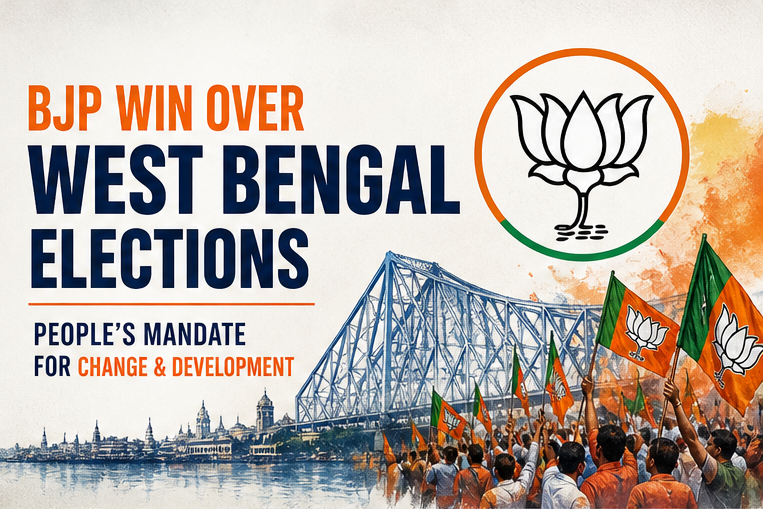
The election results reflected a dramatic shift in voter preferences. BJP’s vote share increased significantly compared to previous elections, signaling its emergence as a major political force in West Bengal.
Key takeaways include:
- BJP’s rapid rise from a marginal player to a dominant force
- Decline of traditional left parties
- Increased polarization in voting patterns
Implications of BJP’s Victory
1. Shift in State Politics
BJP’s victory disrupts decades of regional dominance, introducing a new era of competitive politics in West Bengal.
2. Strengthening BJP Nationally
Winning a crucial state like West Bengal strengthens BJP’s position in national politics and boosts its image as a pan-India party.
3. Policy Changes and Governance
With BJP in power, the state may witness changes in policies, governance style, and administrative priorities, aligning more closely with central government initiatives.
Challenges Ahead for BJP
Despite its victory, BJP faces several challenges:
- Managing regional aspirations and cultural identity
- Delivering on promises of development
- Maintaining law and order
- Handling opposition from TMC and other parties
Opposition’s Future Strategy
The TMC, under Mamata Banerjee, is unlikely to fade away. It will likely regroup and strategize for future elections.
Similarly, left parties and Congress may attempt to rebuild their base, though their current influence remains limited.
Economic and Developmental Outlook
BJP’s victory raises expectations for economic growth and development in West Bengal. Key areas of focus may include:
- Infrastructure development
- Industrial growth
- Employment generation
- Investment promotion
If executed effectively, these initiatives could transform the state’s economy.
Cultural and Social Impact
West Bengal has a unique cultural identity, and any political change brings concerns about preserving it. BJP will need to balance development with cultural sensitivity to gain long-term acceptance.
Comparison with Previous Elections
Compared to earlier elections, this result stands out due to:
- BJP’s unprecedented growth
- Decline of left parties
- Increased voter turnout and engagement
This election could be seen as a watershed moment in the state’s political history.
Media Coverage and Public Perception
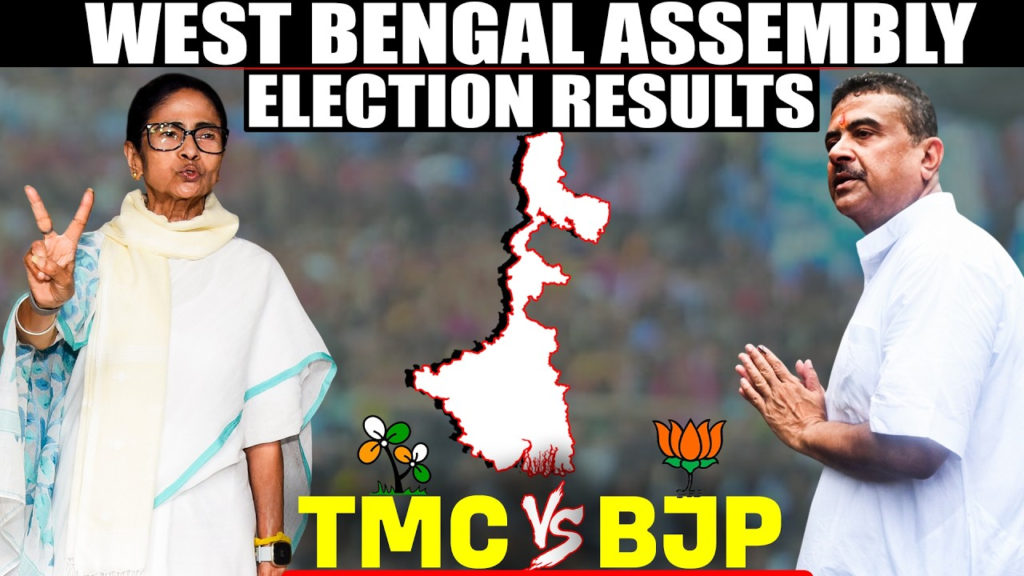
The elections received extensive coverage from national and international media. BJP’s victory was widely seen as a significant political development.
Public opinion remains divided, reflecting the polarized nature of the electorate.
Conclusion
The BJP’s victory in West Bengal marks a historic and transformative moment in Indian politics. From being a marginal player to emerging as a dominant force, the party’s journey reflects strategic planning, strong leadership, and changing voter dynamics.
While the win opens new opportunities, it also brings significant responsibilities. The real test for BJP will be its ability to deliver on promises, maintain social harmony, and drive inclusive development.
For West Bengal, this election signals the beginning of a new political chapter—one that could redefine the state’s future for years to come.
For More Such Amazing Content Please Visit : https://dailykhabrein.com/


 By
By