The IPL Loan Rule allows franchises to temporarily transfer players during the season. Learn full rules, eligibility, restrictions, advantages, and how it can change IPL strategy in 2026.
IPL Loan Rule Explained: The Hidden Strategy Weapon of IPL Teams
The IPL Loan Rule is one of the most underrated yet strategically powerful systems in the Indian Premier League. While fans usually focus on mega auctions, match performances, and playoff races, this rule quietly gives franchises a chance to fix their squad mid-season.
In simple terms, the IPL Loan Rule allows a team to temporarily send or receive a player from another franchise during the ongoing season under strict conditions. Although it has existed for years, it is still rarely used — making it one of IPL’s “hidden weapons”.
This system is especially useful when teams face injuries, poor form, or tactical gaps in their playing XI.
What Exactly is the Loan Rule?

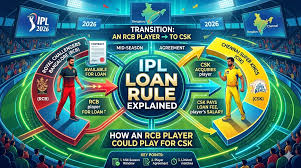
The Loan Rule (also called mid-season transfer system) is a mechanism where players can be temporarily transferred between IPL teams.
It works like this:
👉 A player moves from Team A to Team B for the same season
👉 The move is temporary, not permanent
👉 After IPL ends, the player returns to his original team
This system is inspired by football leagues like the English Premier League, where loan transfers are common.
The idea behind the Loan Rule is simple:
✔ Keep squads flexible
✔ Support struggling teams
✔ Give unused players game time
When Does temporary player transfer Window Open?
The IPL has a fixed timing for this system:
- Loan window opens after each team plays 7 matches
- It stays open for a short mid-season period
This is the point where teams clearly understand:
- Their weaknesses
- Injury issues
- Unused bench strength
So the temporary player transfer acts like a mid-season “repair and upgrade window”.
IPL Loan Rule Eligibility Criteria
Not every player qualifies for this system. The IPL has strict conditions:
✔ Player Requirements:
- Must have played maximum 2 matches in the season
- Includes playing XI or concussion substitute appearances
- Should not be a regular starter
This ensures that only bench or unused players are considered.
👉 The purpose of the IPL Loan Rule is not to transfer stars — but to utilize inactive talent.
Approval System: The Triple Consent Rule

One of the strongest features of the IPL Loan Rule is that it requires full agreement:
All three must approve:
- 🏏 Parent franchise (original team)
- 🏏 Receiving franchise (new team)
- 🧑 The player himself
If any party disagrees, the transfer does not happen.
This keeps the IPL Loan Rule fair and balanced.
Key Restrictions in IPL Loan Rule
To avoid misuse, IPL has strict limitations:
No playing against parent team
A loaned player cannot face his original franchise.
Limited number of loans
- Usually max 2 players per team
- Controlled movement between franchises
Temporary nature
- Valid only for current IPL season
- Player returns after tournament ends
These rules ensure that the IPL Player Loan System does not disturb competitive fairness.
Why IPL Introduced This Rule
The IPL is a long tournament with unpredictable challenges:
- Injuries to key players
- Overseas player unavailability
- Sudden loss of form
- Tactical imbalance in squad
To handle such issues, the IPL Loan Rule was introduced in 2018.
It allows teams to adjust without waiting for next season or auctions.
How Player Loan System Works in Real Life
Even though rarely used, the system can be extremely useful.
Example Scenario:
Imagine:
- CSK loses a key bowler to injury
- A backup bowler in another team is sitting unused
Instead of struggling, CSK can borrow that player temporarily.
This is exactly where the becomes a strategic rescue tool.
Advantages of IPL Loan Rule
1. Better squad balance
Teams can fix weak areas instantly.
2. More game time for players
Bench players get real match exposure.
3. Injury solution system
Immediate replacement option available.
4. Tactical flexibility
Teams can adjust strategy mid-season.
Disadvantages of IPL Loan Rule
Rare usage
Teams still prefer auction-based squads.
Complex negotiations
Requires agreement of three parties.
Team chemistry risk
Mid-season changes can disrupt balance.
Limited impact
Strict rules reduce flexibility.
So, while the IPL Loan Rule is powerful, it is not widely used yet.
Why Teams Avoid Using IPL Loan Rule
Despite its benefits, franchises hesitate because:
- Squad planning is already done during auctions
- Players need time to adjust to new teams
- Risk of disturbing dressing room chemistry
- Strategic secrecy concerns
So the IPL Loan Rule remains more theoretical than practical.
Future of Player Loan Rule in IPL 2026 and Beyond
Cricket experts believe this system could evolve in future IPL seasons.
Possible upgrades:
- Longer loan window
- More flexible eligibility rules
- Multi-season loan agreements
- Tactical swap deals like football leagues
If improved, the IPL Loan Rule could become a major part of IPL strategy.
External References
- IPL Official Website: https://www.iplt20.com
- ESPN Cricinfo IPL Section: https://www.espncricinfo.com/series/ipl
- IPL Overview: https://en.wikipedia.org/wiki/Indian_Premier_League
Frequently Asked Questions (FAQ)
1. What is IPL Loan Rule?
It is a mid-season transfer system allowing temporary player movement between IPL teams.
2. When does this Rule apply?
After each team completes 7 matches in the season.
3. Can loan players face their parent team?
No, they are not allowed to play against their original franchise.
4. Is Loan Rule commonly used?
No, it is rarely used in real IPL seasons.
5. What is the main benefit?
It helps teams fix squad issues and injuries during the season.
Conclusion
The temporary Loan Rule is one of the most innovative yet underused systems in the IPL ecosystem. It provides flexibility, strategic depth, and emergency support to franchises during a long and demanding season.
Even though it is rarely used, its potential is massive. If franchises start using it effectively, the IPL Loan Rule could become as important as auctions and trades in shaping IPL 2026 outcomes.
👉 In future, this rule might completely change how teams manage squads mid-season.
For More Such Amazing Content Please Visit : https://dailykhabrein.com/


 By
By