
Introduction
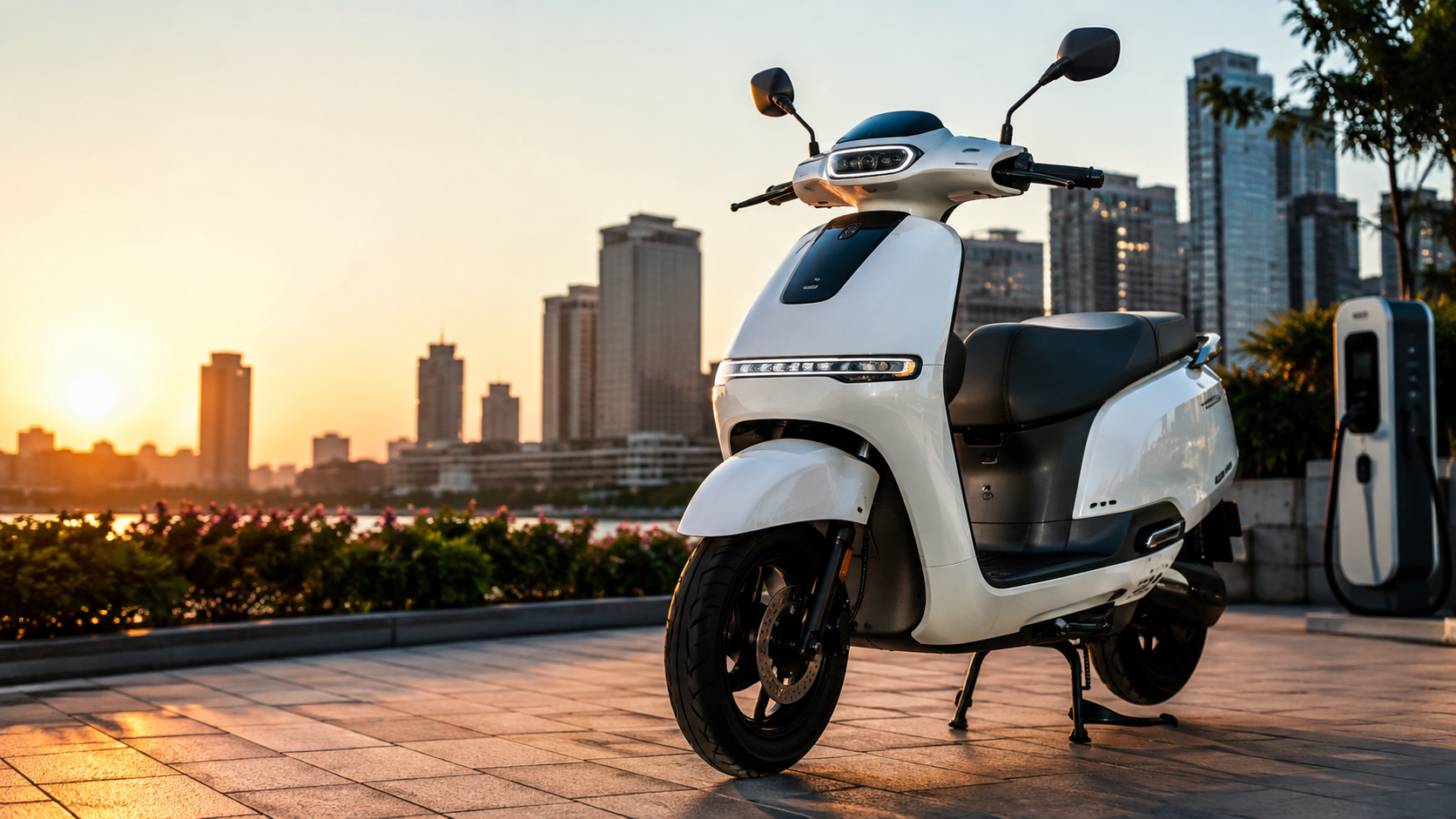
The TVS iQube has become one of the important names in India’s electric scooter market, and its current lineup gives buyers considerably more choice than the earlier versions. TVS Motor now offers the scooter with battery capacities ranging from 2.3 kWh to 5.3 kWh, while the claimed IDC range stretches from 114 km to 212 km, depending on the variant.
The latest development also comes against a changing EV policy environment. The Ministry of Heavy Industries has amended the PM E-DRIVE scheme, with the electric two-wheeler incentive for the applicable period set at ₹2,500 per kWh, capped at ₹5,000 per vehicle, subject to scheme conditions.
For buyers considering an electric scooter in 2026, the iQube therefore deserves a closer look—not just for its range, but also for its technology, battery choices, charging requirements and overall practicality.
Definition: The TVS iQube is a family-oriented electric scooter from TVS Motor Company designed for everyday urban mobility. Depending on the variant, it combines lithium-ion battery packs, connected technology, multiple riding features and an IDC-certified range of up to 212 km.
What Happened?
There is no single new launch event behind the current TVS iQube story. Instead, the scooter’s significance comes from the expanded 2026 lineup and the latest changes to India’s EV incentive framework.
TVS currently lists five major iQube configurations on its India website:
- iQube 2.3 kWh
- iQube 3.1 kWh
- iQube 3.5 kWh
- iQube S 4.7 kWh
- iQube ST 5.3 kWh
The company lists IDC ranges of 114 km, 123 km, 145 km, 175 km and 212 km, respectively.
The flagship iQube ST 5.3 kWh is the range leader, with a claimed 212 km IDC range and an 82 km/h top speed. The iQube S 4.7 kWh offers a claimed 175 km IDC range, while the 3.5 kWh version is rated at 145 km.
This broader lineup allows customers to choose between a lower-cost city commuter and a larger-battery version aimed at riders who place greater importance on range.
Complete Details
TVS iQube Price
TVS currently lists the effective ex-showroom price in India starting at ₹95,124 for the entry-level 2.2/2.3-kWh configuration on its India pricing page, although displayed specifications can vary by the specific market page and configuration. TVS also notes that prices can change based on location, colour, accessories and applicable charges.
For Delhi, TVS currently lists effective ex-showroom prices of approximately:
| Variant | Battery | IDC Range | Top Speed | Effective Ex-Showroom Price* |
|---|---|---|---|---|
| iQube 2.3 kWh | 2.3 kWh | 114 km | 68 km/h | ₹95,124 |
| iQube 3.1 kWh | 3.1 kWh | 123 km | 82 km/h | ₹1,04,962 |
| iQube 3.5 kWh | 3.5 kWh | 145 km | 82 km/h | ₹1,10,200 |
| iQube S 4.7 kWh | 4.7 kWh | 175 km | 82 km/h | ₹1,30,340 |
| iQube ST 5.3 kWh | 5.3 kWh | 212 km | 82 km/h | ₹1,46,877 |
*Prices shown are effective ex-showroom figures displayed by TVS for Delhi and can change. Road tax, insurance, registration and other charges are additional.
Battery and Range
Battery capacity is one of the biggest differences between iQube variants.
The entry-level model uses a smaller battery aimed at city riding, while the 5.3-kWh ST is designed for customers who want the longest claimed range in the lineup.
TVS quotes up to 212 km IDC range for the iQube ST 5.3 kWh. IDC figures are laboratory/test-cycle figures and should not be interpreted as guaranteed real-world range.
Charging
Charging time depends on the battery and charger configuration.
TVS lists approximately 2 hours 50 minutes for 0–80% charging for the 2.3-kWh version, while the 5.3-kWh ST is listed at around 4 hours 18 minutes for 0–80% on its current product page.
The actual charging duration can vary with input conditions and other factors. TVS’s 2026 owner’s manual also notes that charging time can be higher or lower depending on power rating, input voltage and battery capacity.
Features and Technology
The TVS iQube is positioned as a connected electric scooter rather than simply a battery-powered commuter.
Depending on the variant, buyers can get features such as:
- Connected smart features
- Turn-by-turn navigation
- Q-Park Assist
- Hill Hold functionality
- TFT instrumentation
- SmartXonnect connectivity
- Smartphone-based vehicle information
- All-LED lighting
TVS says the iQube ecosystem offers 118+ connected features and access to more than 2,000 charging locations across India.
Performance
Most current iQube variants have a listed top speed of 82 km/h, while the entry-level 2.3-kWh version is rated at 68 km/h.
That makes the higher variants more suitable for riders who regularly travel beyond short neighbourhood trips, although buyers should still consider traffic conditions and the availability of charging at their destination.
Why This Matters

The importance of the TVS iQube goes beyond one scooter model.
India’s electric two-wheeler market is moving toward greater consumer choice, larger batteries and stronger connected features. At the same time, government policy continues to influence the final purchase economics.
The PM E-DRIVE scheme was amended on 10 August 2026. The latest notification provides an incentive of ₹2,500 per kWh for eligible registered electric two-wheelers during the applicable period, capped at ₹5,000 per vehicle, with an eligible maximum ex-factory price of ₹1.5 lakh.
The scheme’s total outlay was also revised to ₹11,900 crore, with implementation through March 2028. The Ministry’s official portal lists the 10 August 2026 enhancement as its latest scheme notification.
For buyers, however, government incentives should not be the only factor. Battery size, daily kilometres, home charging access, service availability and the difference between claimed and actual range can have a bigger impact over several years.
Public/Expert Reaction
There is no specific new public reaction that can be reliably attributed to the latest 2026 lineup from an official TVS announcement.
However, the product strategy itself indicates an attempt to cover several price and range requirements rather than pushing every buyer toward one premium specification.
The 3.1-kWh and 3.5-kWh variants sit closer to the middle of the range, while the 4.7-kWh S and 5.3-kWh ST target customers who want substantially greater claimed range.
For consumers, this is potentially useful because the right iQube can be selected according to daily travel rather than simply choosing the largest battery.
Important Facts
Here are the key points buyers should remember:
- Maximum claimed IDC range: 212 km on iQube ST 5.3 kWh.
- Battery options: 2.3 kWh, 3.1 kWh, 3.5 kWh, 4.7 kWh and 5.3 kWh in the current listed lineup.
- Top speed: Up to 82 km/h on most variants.
- Entry effective ex-showroom price in Delhi: ₹95,124 on the current TVS Delhi page.
- Flagship: iQube ST 5.3 kWh.
- Government EV incentive: The latest PM E-DRIVE amendment sets ₹2,500/kWh for eligible e-2Ws from 1 April 2025 to 31 March 2028, capped at ₹5,000 per vehicle, subject to conditions.
- Charging: Charging time varies significantly between battery versions.
- Real-world range: Can differ from IDC-certified range depending on riding conditions, speed, load, traffic and temperature.
FAQs
1. What is the price of the TVS iQube?
The effective ex-showroom price currently starts around ₹95,124 on TVS’s India pricing page, while the exact price depends on the variant, location and applicable incentives or charges.
2. What is the range of the TVS iQube?
The current lineup offers claimed IDC ranges from 114 km to 212 km, depending on the battery and variant. The iQube ST 5.3 kWh has the highest claimed range at 212 km.
3. Which is the top TVS iQube variant?
The TVS iQube ST 5.3 kWh is the flagship version in the current lineup. It has a 5.3-kWh battery and a claimed 212 km IDC range.
4. How many battery options does the TVS iQube have?
TVS currently lists battery capacities of 2.3 kWh, 3.1 kWh, 3.5 kWh, 4.7 kWh and 5.3 kWh across the iQube range.
5. Is the TVS iQube suitable for daily commuting?
Yes. Its family-oriented design, multiple battery options, connected technology and different price points make it suitable for urban commuting. However, buyers should choose the battery size based on daily distance and charging access.
Final Verdict
The TVS iQube remains a strong contender for buyers looking for a practical electric scooter with multiple battery and range choices.
Its biggest advantage is variety. A buyer who mostly travels around town does not necessarily need the flagship 5.3-kWh battery, while someone covering longer daily distances may find the larger 4.7-kWh or 5.3-kWh versions more appealing.
The claimed 212 km IDC range of the iQube ST is certainly eye-catching, but consumers should remember that IDC figures are not the same as guaranteed real-world range.
The changing PM E-DRIVE incentive structure is another reason to check the final price at the time of purchase rather than relying on older online figures. The latest government notification has revised the e-2W incentive structure and extended the broader scheme framework through March 2028.
For a city commuter, the mid-range iQube variants could offer the most balanced proposition. For buyers who prioritise maximum claimed range, the ST 5.3 kWh is the clear choice.
External Sources
Authoritative sources:
For More Such Amazing Content Please Visit : https://dailykhabrein.com/


 By
By