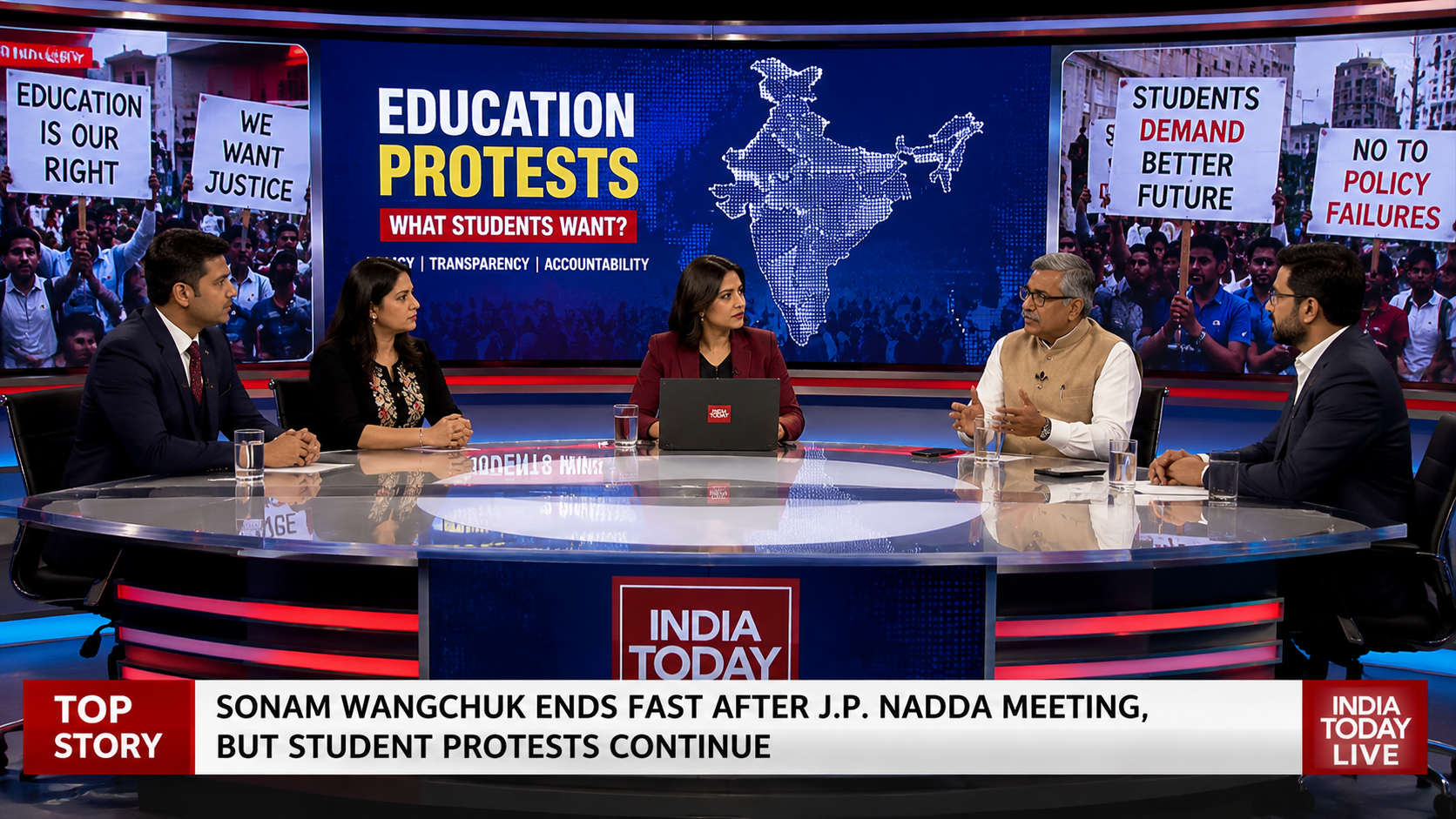

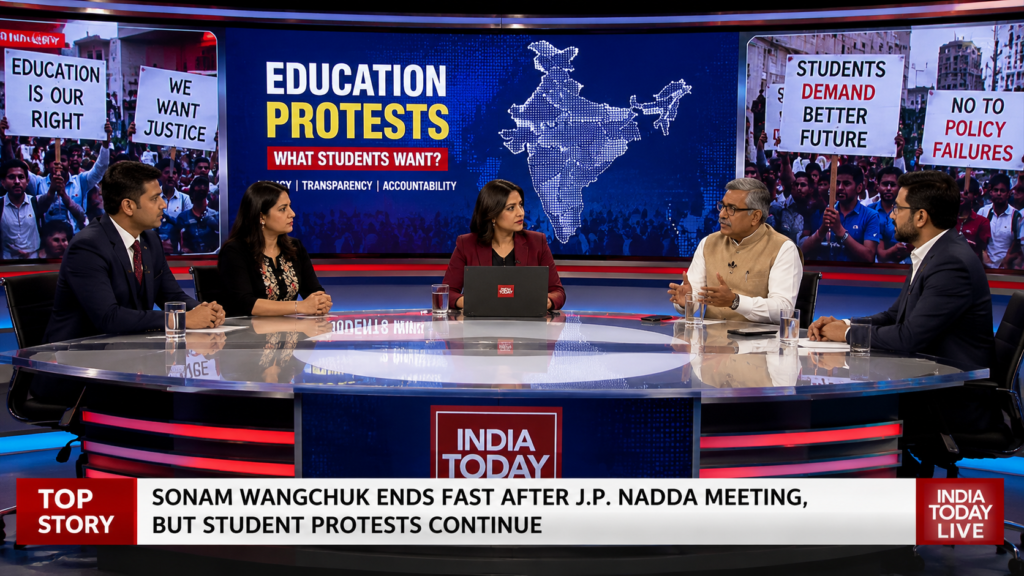
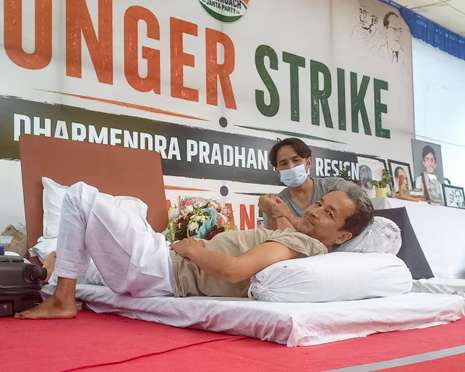
Sonam Wangchuk Breaks Fast refers to the decision by education reform activist Sonam Wangchuk to end his hunger strike after meeting BJP President J.P. Nadda. Despite this development, several student groups continue protesting, demanding concrete action from Union Education Minister Dharmendra Pradhan on education-related concerns.
Introduction
Environmentalist and education reform advocate Sonam Wangchuk has ended his hunger strike after holding discussions with BJP National President J.P. Nadda. While the end of the fast marked an important development, it did not bring the ongoing student demonstrations to a close.
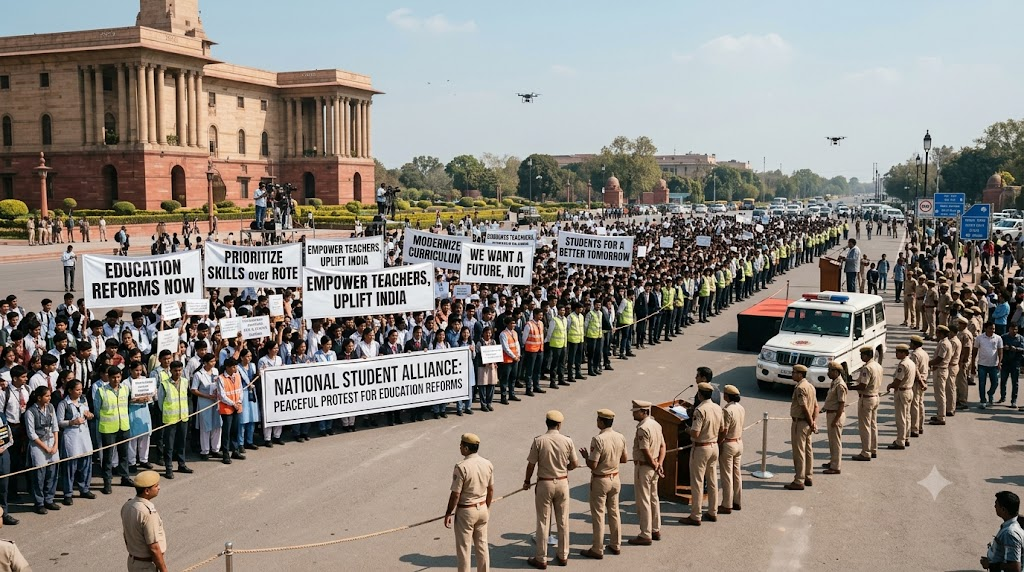
Many student groups continue to protest, demanding greater accountability from Union Education Minister Dharmendra Pradhan and seeking stronger commitments on issues related to education, transparency, and student welfare. The developments have sparked nationwide discussion, with supporters calling for dialogue while others insist that policy changes—not symbolic gestures—are necessary.
What Happened?
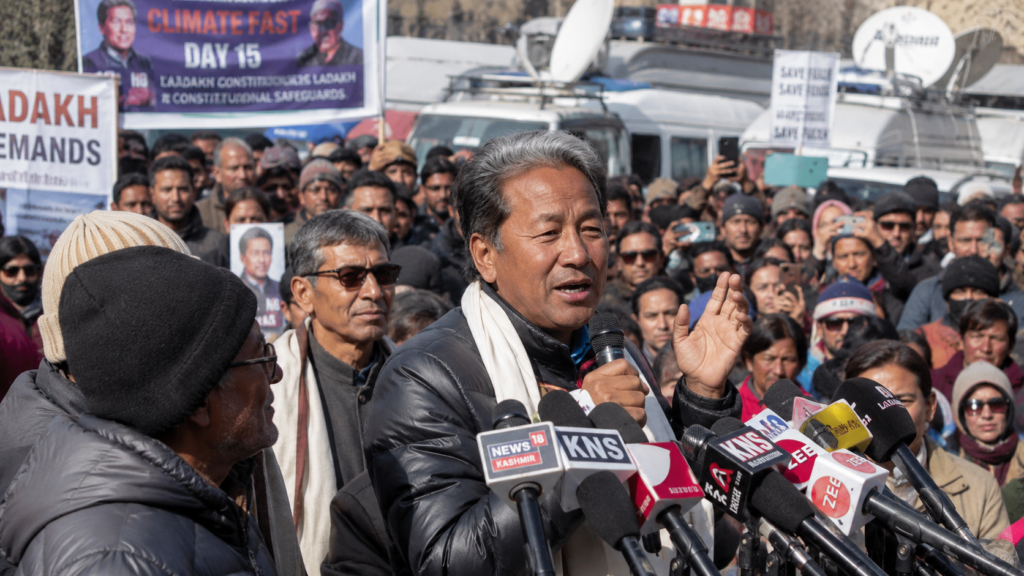
Sonam Wangchuk concluded his fast following a meeting with J.P. Nadda, describing the discussions as constructive and expressing hope that democratic dialogue would continue.
However, several student organisations clarified that their protest movement would continue. According to protest organisers, the demonstrations are no longer centred only on Wangchuk’s fast but also on broader concerns regarding education policies and the government’s response to student demands.
The Education Ministry has not announced any major policy changes directly linked to these protests.
Complete Details
The sequence of events unfolded as follows:
- Sonam Wangchuk began a hunger strike to draw attention to issues concerning education and governance.
- Student groups across different regions organised peaceful demonstrations in solidarity.
- BJP President J.P. Nadda met Wangchuk to discuss the concerns.
- Following the meeting, Wangchuk announced the end of his fast.
- Protest organisers stated that demonstrations would continue until broader demands receive a satisfactory response.
While Wangchuk welcomed the dialogue, student representatives emphasised that ending the fast does not automatically resolve the issues they have raised.
Comparison Table
| Issue | Before Nadda Meeting | After Fast Ended |
|---|---|---|
| Hunger Strike | Ongoing | Ended |
| Student Protest | Active | Continues |
| Government Dialogue | Limited | Initiated |
| Policy Changes | None announced | Awaited |
| Public Attention | High | Remains High |
Why This Matters
The protests highlight broader questions about communication between policymakers and students.
Several observers believe that meaningful engagement is necessary to prevent prolonged unrest.
Key reasons this matters include:
- Student trust in educational institutions
- Government accountability
- Policy transparency
- Democratic dialogue
- Future education reforms
The continuation of protests suggests that many participants are seeking concrete assurances rather than symbolic developments.
Public and Expert Reaction
Political leaders, education experts, and civil society organisations have offered differing perspectives.
Some welcomed the meeting between Wangchuk and Nadda as an important first step toward dialogue.
Others argued that continued engagement and measurable policy action will determine whether the protests eventually conclude.
Across social media, public opinion remains divided. While many praised Wangchuk’s peaceful approach, others expressed support for students who believe their concerns remain unresolved.
Important Facts
- Sonam Wangchuk has officially ended his hunger strike.
- The decision followed discussions with BJP President J.P. Nadda.
- Student protests continue despite the fast ending.
- Protesters are demanding stronger responses from Union Education Minister Dharmendra Pradhan.
- No major policy announcement has yet been made directly in response to the demonstrations.
- Authorities continue to monitor the situation while appeals for peaceful dialogue continue.
Authoritative Sources
Readers should refer to official information from:
- Ministry of Education
- Press Information Bureau (PIB)
- Official statements issued by Sonam Wangchuk
- BJP official communications
- Delhi Police advisories (where applicable)
Where reporting relies on official statements, those statements should be clearly attributed and distinguished from analysis or opinion.
Frequently Asked Questions
1. Why did Sonam Wangchuk end his fast?
He ended the hunger strike after meeting BJP President J.P. Nadda and described the discussion as constructive.
2. Why are students still protesting?
Student groups say their demands extend beyond Wangchuk’s fast and include broader concerns about education policy and government accountability.
3. Is the protest peaceful?
Organisers have stated that the demonstrations are intended to remain peaceful and democratic.
4. Has the government announced any policy changes?
At the time of writing, no major policy announcement directly linked to the protests has been officially announced.
5. What happens next?
Future developments will depend on continued dialogue between student representatives, government officials, and other stakeholders.
Final Verdict
The end of Sonam Wangchuk’s hunger strike marks a significant moment, but it has not ended the wider student movement. The continuing demonstrations indicate that many participants are looking for substantive policy responses rather than symbolic milestones.
Whether the current dialogue leads to meaningful reforms will depend on future negotiations, official announcements, and the willingness of all sides to engage constructively. As events continue to evolve, readers should rely on official statements and verified reporting for the latest updates.
For More Such Amazing Content Please Visit : https://dailykhabrein.com/

 By
By