
NTA Bans Telegram Before Re-NEET Exam 2026: Everything Students Need to Know
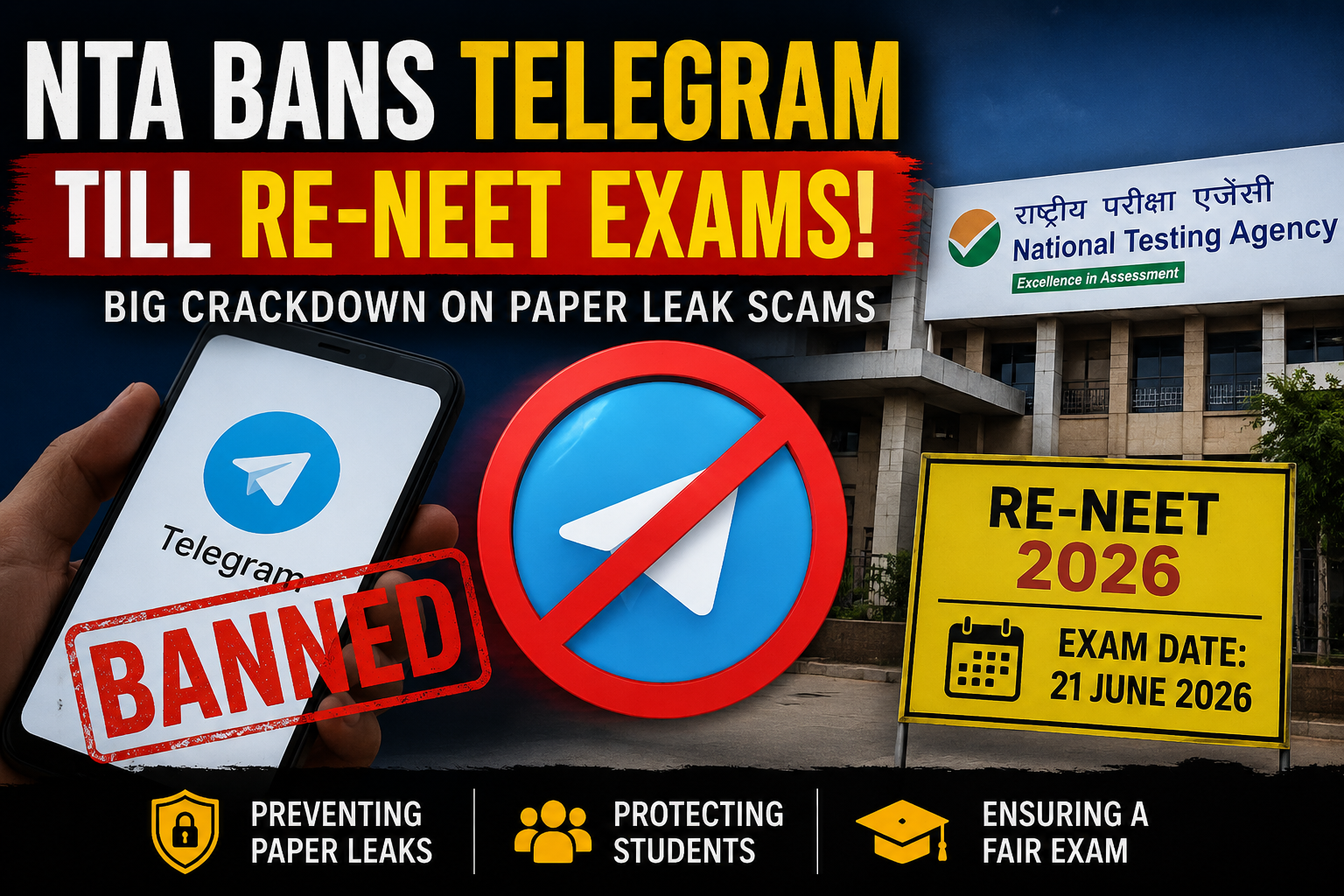
In a major and controversial move, the Indian government has temporarily restricted access to Telegram across the country ahead of the NEET UG 2026 re-examination. The decision comes after allegations that several Telegram channels were being used to circulate fake question papers, promote exam fraud, and mislead students preparing for one of India’s most important entrance examinations.
The National Testing Agency (NTA) has supported the government’s action, calling it a necessary step to protect the integrity of the upcoming Re-NEET exam scheduled for June 21, 2026. According to officials, the restriction will remain in force until June 22, covering the examination day and its immediate aftermath.
The decision has sparked intense debate across social media, with some praising the crackdown on cheating networks while others argue that banning an entire platform is an excessive measure.
Why Did NTA Recommend a Telegram Ban?
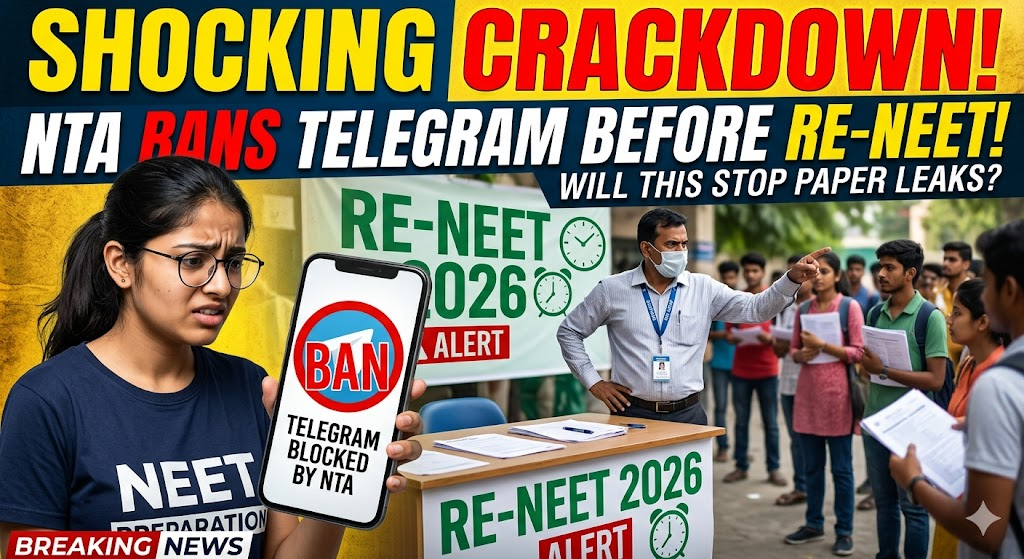
The National Testing Agency has stated that Telegram was increasingly being exploited by fraudsters and organized cheating rackets ahead of the Re-NEET examination. Officials found numerous channels allegedly selling fake leaked papers, answer keys, and exam-related misinformation to desperate students.
According to reports, authorities observed that scammers were charging large sums of money for supposedly leaked NEET question papers. Many students reportedly became targets of cyber fraud schemes designed to exploit their anxiety before the exam.
The NTA argued that individual channel takedowns were not enough because new channels kept appearing. As a result, authorities recommended broader restrictions on Telegram as a temporary preventive measure.
What Exactly Has Been Restricted?
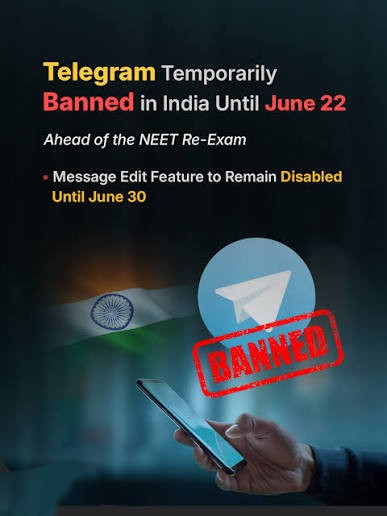
The Ministry of Electronics and Information Technology (MeitY) has reportedly issued directions under Section 69A of the Information Technology Act to temporarily block access to Telegram in India until June 22.
In addition to restricting platform access, the government has also directed Telegram to disable its message-editing feature in India for a limited period ending June 30. Authorities believe this feature was being misused by certain groups to alter messages after posting them, making fraudulent claims appear more credible.
Officials say these measures are temporary and specifically linked to protecting the Re-NEET examination process.
NTA’s Official Position on the Telegram Restriction
The NTA has publicly welcomed the Centre’s decision, emphasizing that the move is aimed at protecting students rather than limiting communication. According to the agency, Telegram had become a significant channel for spreading false information and running exam-related scams.
Officials maintain that the temporary restriction is intended to:
- Prevent the spread of fake question papers
- Stop cyber fraud targeting students
- Reduce misinformation during the examination period
- Protect the fairness of the Re-NEET exam
- Strengthen confidence in the examination process
The agency insists that extraordinary circumstances required extraordinary measures.
Students React: Support, Frustration, and Confusion
The announcement has triggered mixed reactions among students and internet users.
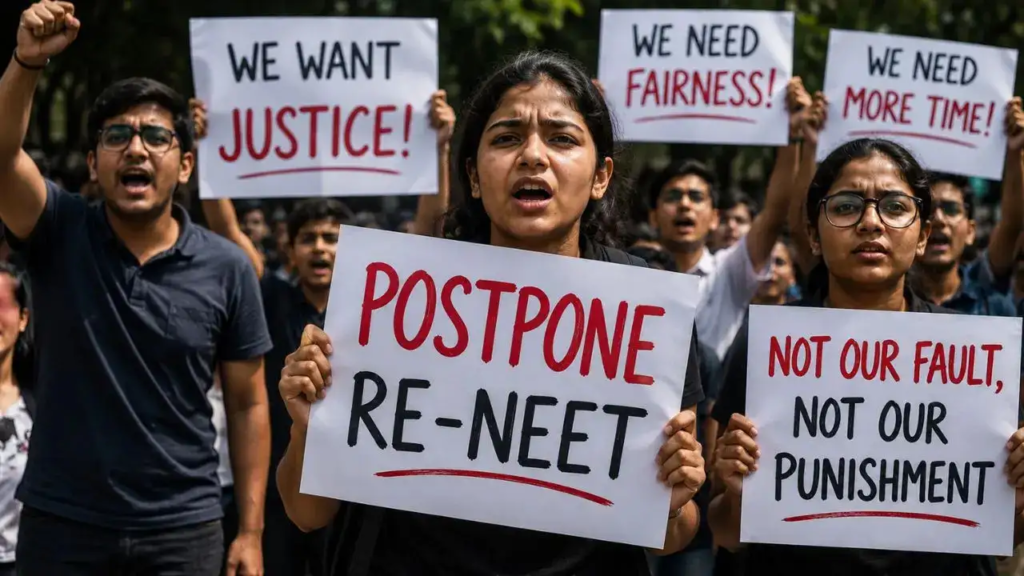
Many students support the decision, believing that stricter controls are necessary after repeated paper leak controversies. Some argue that any step that helps ensure a fair examination should be welcomed.
However, critics argue that banning an entire platform punishes millions of legitimate users who rely on Telegram for educational resources, communication, and business purposes. Several online discussions have questioned whether fraudsters might simply move to other platforms such as WhatsApp, Signal, or Discord.
Others believe the move addresses the symptoms rather than the root causes of examination leaks. Critics argue that stronger security measures within the examination process itself would be more effective than restricting a communication platform.
Will the Telegram Ban Actually Stop Exam Fraud?
This remains the biggest question.
Supporters of the restriction believe it will disrupt organized cheating networks during the critical days surrounding the examination. By removing a major communication channel used by suspected fraudsters, authorities hope to reduce the spread of fake papers and scams.
However, technology experts point out that determined fraudsters often migrate to alternative platforms when one service becomes unavailable. As a result, some observers doubt that the restriction alone can eliminate examination malpractice.
The ultimate success of the measure will likely depend on whether it is combined with stronger examination security, cyber monitoring, and enforcement actions against those responsible for paper leaks.
Impact on Students Preparing for Re-NEET
Students preparing for the June 21 examination should be aware of several important points:
1. Avoid Fake Paper Leak Claims
Authorities have repeatedly warned students not to trust individuals claiming to possess leaked question papers or answer keys. Most such claims are fraudulent and designed to steal money.
2. Follow Official Sources Only
Candidates should rely exclusively on official announcements from the NTA and government authorities regarding examination updates.
3. Stay Focused on Preparation
Experts advise students not to become distracted by rumors circulating online. Preparation, revision, and mental well-being remain the most important priorities ahead of the examination.
4. Beware of Cyber Scams
Fraudsters often exploit examination anxiety to trick students into paying for fake study materials, leaked papers, or guaranteed admissions. Authorities recommend reporting suspicious activity immediately.
A Bigger Debate About Digital Freedom
Beyond the examination itself, the Telegram restriction has sparked a broader discussion about internet governance and digital rights.
Civil society groups and digital freedom advocates have questioned whether platform-wide restrictions are proportionate responses to isolated criminal activities. Critics argue that such measures could create precedents for future restrictions on digital communication services.
Supporters, however, argue that protecting the integrity of national examinations affecting millions of students justifies temporary intervention under exceptional circumstances.
The debate is likely to continue even after the Re-NEET examination concludes.
What Happens Next?
The Re-NEET examination is scheduled for June 21, 2026. The Telegram restriction is expected to remain in place until June 22, while the platform’s message-editing feature is reportedly disabled until June 30.
Authorities will closely monitor the examination process to determine whether the restrictions help reduce fraud and misinformation.
For now, students are being encouraged to ignore rumors, focus on preparation, and rely only on official information channels.
Final Verdict
The decision to temporarily restrict Telegram ahead of the Re-NEET examination marks one of the strongest actions taken by authorities against a major messaging platform in relation to exam security.
While supporters see it as a bold move to protect students and restore trust in the examination system, critics question whether platform restrictions can truly solve the deeper issues behind paper leaks and organized cheating networks.
One thing is certain: with millions of students watching closely, the success or failure of this decision could shape future policies regarding examination security and digital platforms in India.
FAQs
Why did NTA ban Telegram before Re-NEET 2026?
NTA supported the temporary restriction because authorities found Telegram was allegedly being used by fraudsters to spread fake question papers and examination scams.
Until when is Telegram restricted in India?
Reports indicate that Telegram access has been temporarily restricted until June 22, 2026.
When is the Re-NEET 2026 exam?
The NEET UG 2026 re-examination is scheduled for June 21, 2026.
Has Telegram been permanently banned?
No. Current reports indicate that the restriction is temporary and linked specifically to the Re-NEET examination period.
Can students still use Telegram after June 22?
If the temporary restriction is lifted as planned, access should be restored after June 22. However, students should follow official updates for confirmation.
For More Updates, Follow the official website of NTA : https://neet.nta.nic.in/
For More Such Amazing Content Please Visit : https://dailykhabrein.com/


 By
By