
Introduction: India’s Fuel Revolution Has Begun!
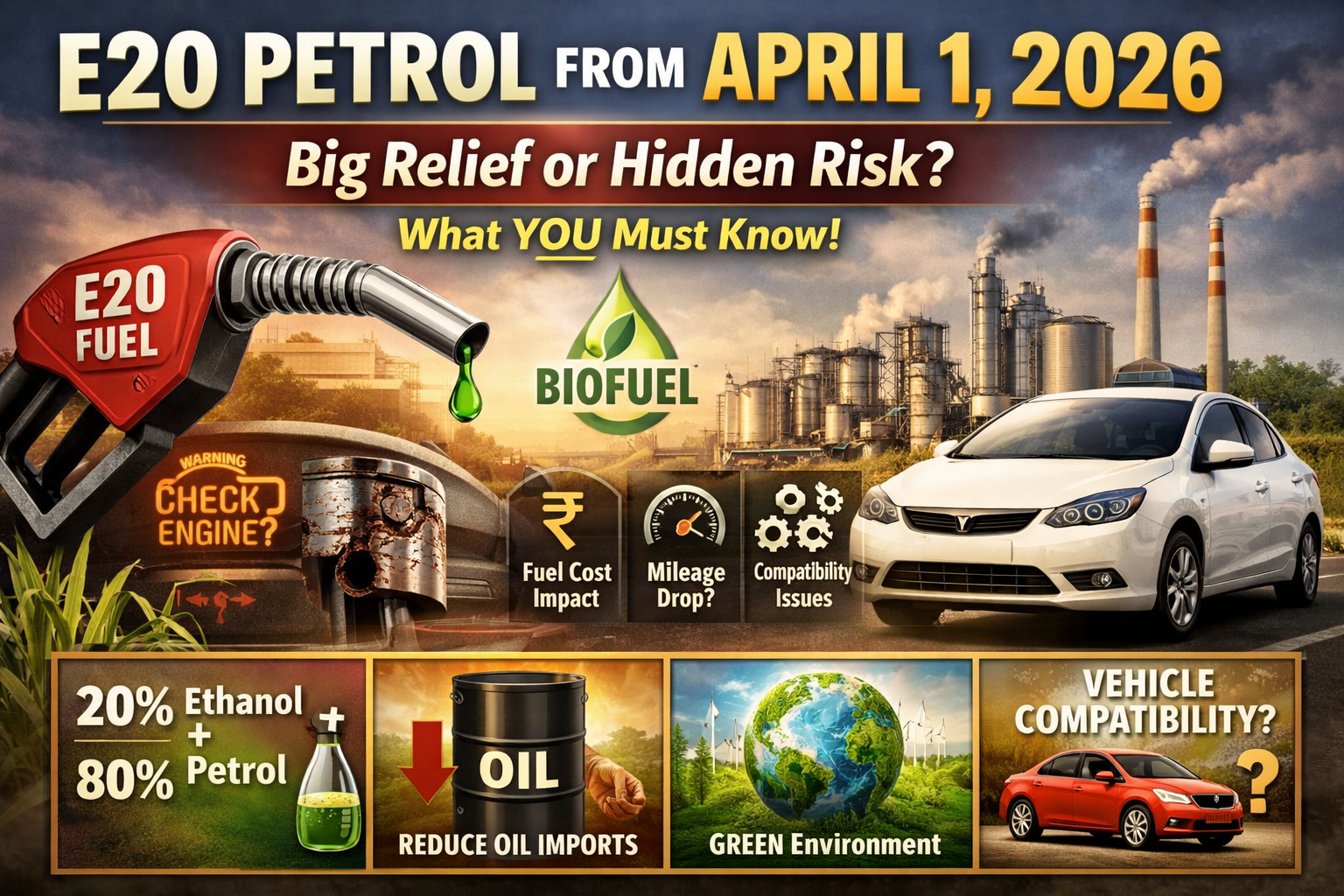
India has officially stepped into a new fuel era. From April 1, 2026, the government has mandated that all petrol sold across the country must be E20 fuel — a blend of 20% ethanol and 80% petrol.
This is not just a small change. It’s a massive shift in India’s energy policy, affecting millions of vehicles, fuel prices, and even farmers.
But here’s the real question:
👉 Is E20 petrol good for you — or could it harm your vehicle?
Let’s break everything down in this detailed guide.
🛢️ What is E20 Petrol?
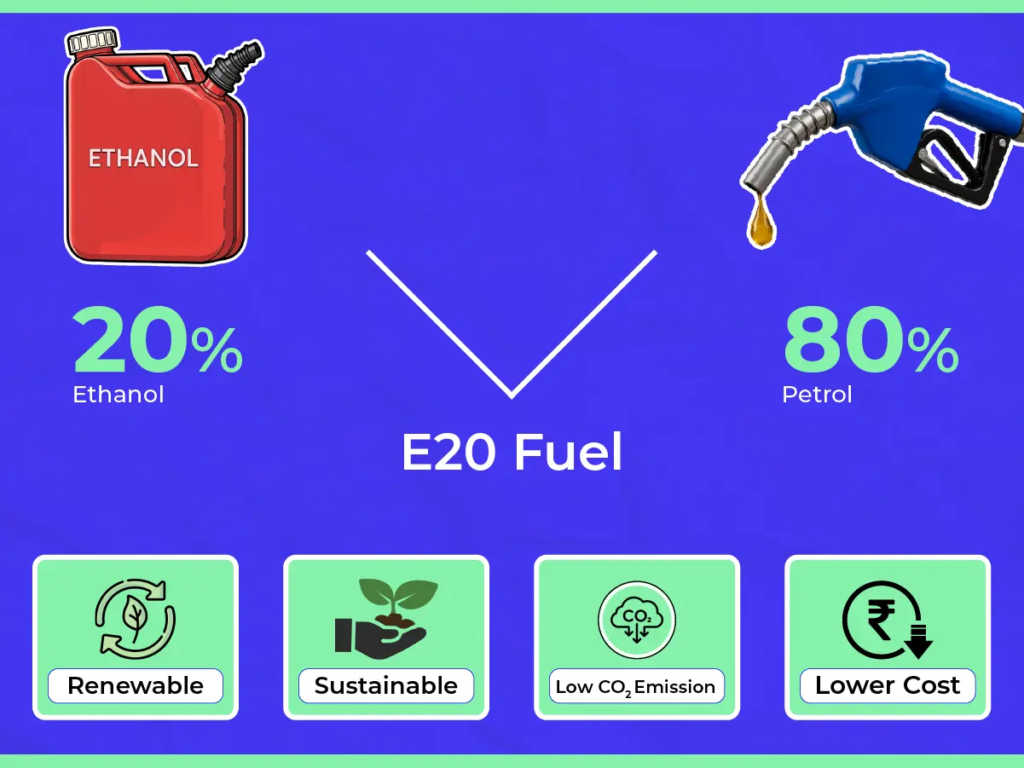
E20 petrol is a type of ethanol-blended fuel that contains:
- 20% ethanol (biofuel made from crops like sugarcane, maize)
- 80% conventional petrol
This replaces the earlier E10 petrol (10% ethanol) that India had been using for years.
From April 1, 2026:
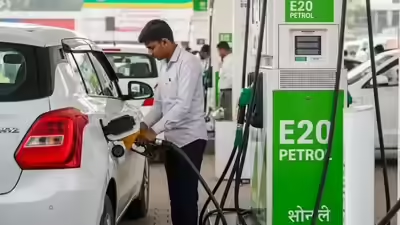
- Every petrol pump must supply E20 fuel
- Minimum RON 95 (higher quality fuel) is mandated
- Applies across all states and UTs
India’s shift to E20 petrol is part of a larger national strategy:
- Reduce dependence on imported crude oil
- Cut pollution and carbon emissions
- Boost farmers’ income through ethanol demand
- Strengthen energy security
According to recent reports, this move is being seen as a major step toward cleaner mobility and self-reliance.
🎯 Government’s Big Goal: Why E20 Petrol Matters
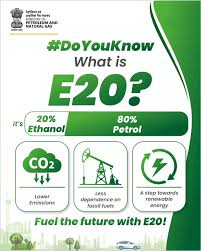
The E20 mandate is part of the Ethanol Blending Programme (EBP).
Key Objectives:
1. 🇮🇳 Reduce Oil Imports
India imports a huge amount of crude oil. E20 helps reduce this dependency.
👉 Experts say this could save billions of dollars annually.
2. 🌱 Cleaner Environment
Ethanol burns cleaner than petrol.
- Lower greenhouse gas emissions
- Reduced air pollution
- Better for long-term climate goals
3. 🌾 Boost Farmer Income
Ethanol is made from:
- Sugarcane
- Maize
- Food grains
This creates new income sources for farmers, strengthening rural economy.
4. ⚡ Higher Fuel Quality (RON 95)
E20 petrol now comes with higher octane rating:
- Earlier petrol: ~91–92 RON
- E20 petrol: ~95+ RON
Higher octane = better engine efficiency and less knocking
🚗 Will Your Vehicle Support E20 Petrol?
This is the MOST IMPORTANT question.
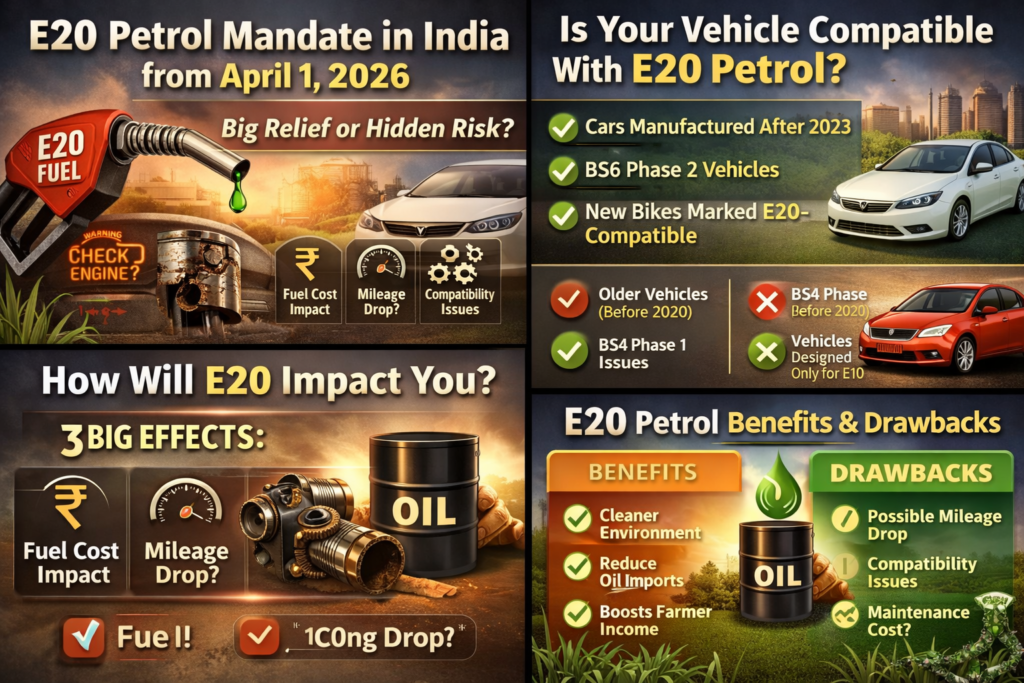
✅ Vehicles That Are Safe:
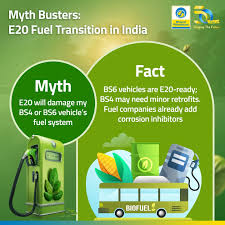
- Cars manufactured after 2023
- BS6 Phase 2 vehicles
- New bikes labeled E20-compatible
⚠️ Vehicles That May Face Issues:
- Older cars (before 2020)
- BS4 vehicles
- Vehicles designed only for E10 fuel
Possible Problems in Old Vehicles:
- Reduced mileage
- Engine wear over time
- Rubber/plastic component damage
- Corrosion in fuel system
Reports indicate that older vehicles may experience efficiency issues, though not necessarily safety risks
E20 vs E10 Petrol: Key Differences
| Feature | E10 Petrol | E20 Petrol |
|---|---|---|
| Ethanol Content | 10% | 20% |
| Emissions | Moderate | Lower |
| Mileage | Better | Slightly lower |
| Compatibility | Most vehicles | New vehicles preferred |
| Octane Rating | ~91 | ~95 |
💸 Will Petrol Prices Increase or Decrease?
This is still evolving, but:
Expected Trends:
- Ethanol is cheaper than petrol
- Government subsidies may stabilize prices
- Prices may stay similar or slightly lower
However:
👉 Mileage may reduce slightly → effective cost could increase
📉 Does E20 Reduce Mileage?
Yes — but slightly.
Studies suggest:
- Mileage drop: 2–5% in some vehicles
- Reason: Ethanol has lower energy density
👉 This means you may need more fuel for same distance
🔧 What Car Companies Are Doing
Automakers are already preparing for E20:
- Manufacturing E20-compatible engines
- Testing materials resistant to ethanol
- Introducing Flexible Fuel Vehicles (FFVs)
India may soon see vehicles that can run on:
👉 100% ethanol (E100) in future
⚠️ Concerns & Criticism Around E20 Petrol
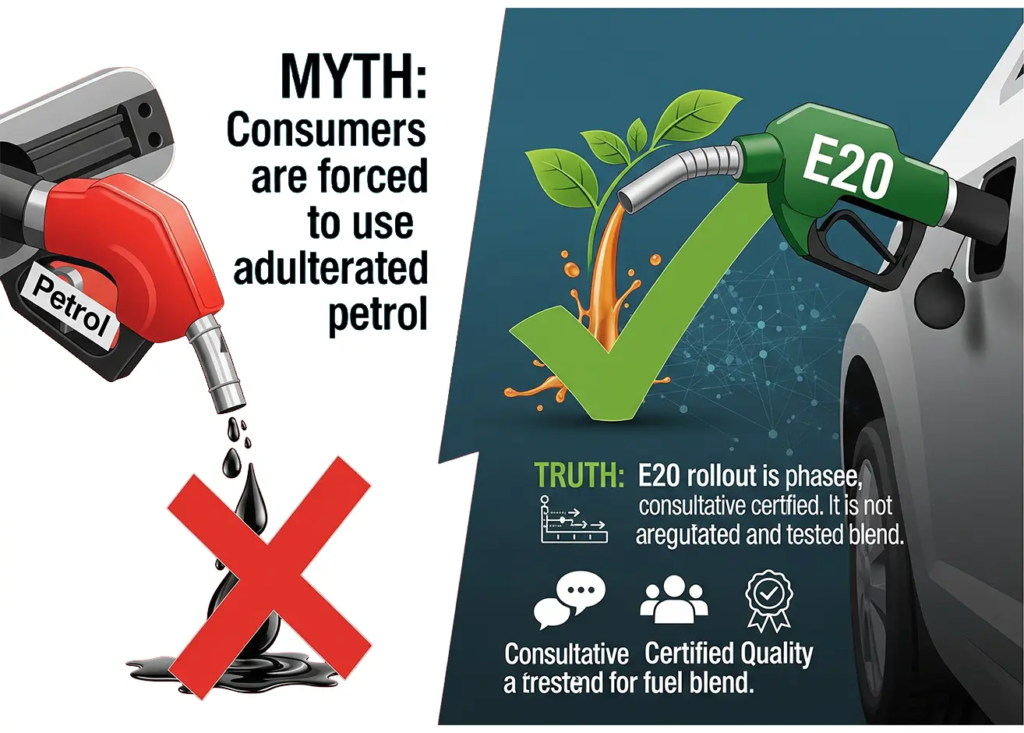
Despite benefits, there are concerns:
1. Food vs Fuel Debate
Using crops for fuel could:
- Increase food prices
- Affect food supply
2. Infrastructure Challenges
- Ethanol storage & transport issues
- Need for new fuel systems
3. Impact on Old Vehicles
Millions of vehicles may not be fully compatible.
4. Mileage Loss
Users may feel fuel is “consumed faster”
🌍 How India Compares Globally
Countries already using ethanol blends:
- 🇧🇷 Brazil: Up to 85% ethanol (E85)
- 🇺🇸 USA: E10 to E15 common
India is now joining the global clean fuel movement.
🔮 Future of Fuel in India
E20 is just the beginning.
What’s Coming Next:
- Flexible Fuel Vehicles (FFVs)
- Electric Vehicles (EVs)
- Hydrogen fuel technology
India is moving toward a multi-fuel future.
🧠 What Should You Do as a Vehicle Owner?
✔️ If You Have a New Car:
- No problem — E20 ready
⚠️ If You Have an Old Car:
- Check vehicle manual
- Consult service center
- Monitor mileage & performance
🔧 Smart Tips:
- Regular servicing
- Use high-quality fuel
- Replace rubber parts if needed
📊 Pros and Cons of E20 Petrol
✅ Advantages:
- Cleaner environment
- Reduced oil imports
- Supports farmers
- Higher octane fuel
❌ Disadvantages:
- Slight mileage drop
- Compatibility issues
- Possible maintenance cost increase
Conclusion: Game-Changer or Gamble?
The E20 petrol rollout from April 1, 2026 is a historic shift in India’s energy journey.
It brings:
✔ Cleaner fuel
✔ Stronger economy
✔ Better energy security
But also:
⚠ Challenges for older vehicles
⚠ Slight performance trade-offs
👉 The bottom line:
E20 petrol is the future — but adaptation is key.
FAQs
Q1. Is E20 petrol mandatory in India?
Yes, from April 1, 2026, all petrol pumps must supply E20 fuel.
Q2. Can old cars run on E20 petrol?
Yes, but they may face reduced mileage or minor performance issues.
Q3. Is E20 petrol cheaper?
It may be slightly cheaper or similar in price, but mileage impact matters.
Q4. What is RON 95 in E20 petrol?
It is a measure of fuel quality that prevents engine knocking.
📢 Final Thought
India is changing how it fuels its future.
👉 The real question is:
Is your vehicle ready for it?
For More Such Amazing Content Please Visit : https://dailykhabrein.com/


 By
By